
By Tech Gear Hub • Last updated: November 13, 2026
As an Amazon Associate, Tech Gear Hub earns from qualifying purchases made through links on this page. Prices change often — check the current price on Amazon before you buy.

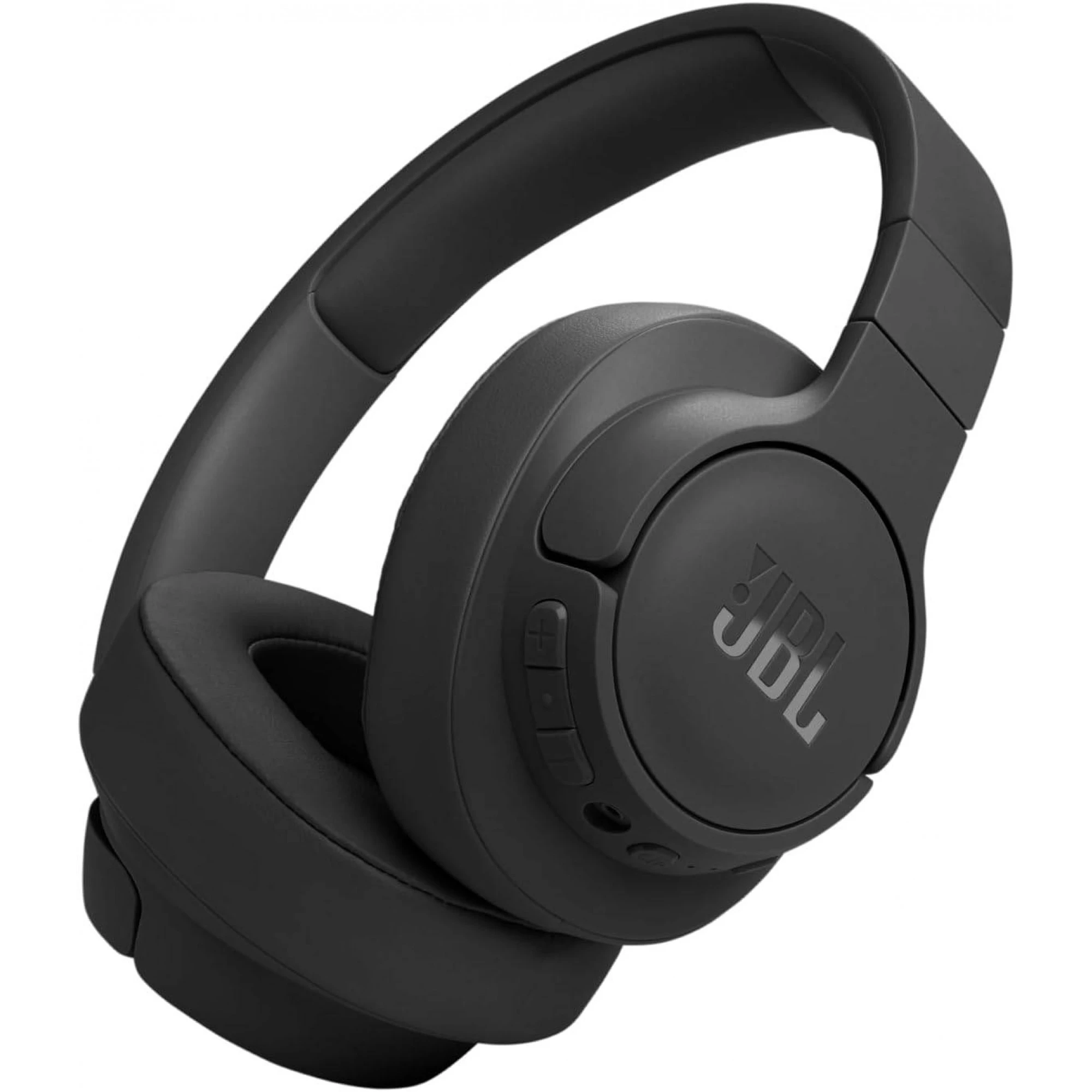
The JBL Tune 770NC in black. (Photo: JBL / Amazon product listing.)
Tech Gear Hub compared the JBL Tune 770NC with the Sony WH-CH720N to find which budget ANC headphones win in 2026 — and the answer depends on what you value most. The JBL Tune 770NC wins on battery life, with up to 44 hours of playback with ANC on and 70 hours with it off, per JBL's official specs, while the Sony WH-CH720N wins on comfort and call quality, weighing just 192 grams against the JBL's 232 grams. Both launched as affordable noise-cancelling over-ears — the JBL at $99 and the Sony at $149 — and both are regularly discounted below those launch prices, so the real-world gap is usually smaller than $50. For most people, the JBL is the better buy because its battery lasts 9 hours longer with ANC on and it costs less, but commuters who wear headphones all day should look hard at the lighter Sony.
To see the Sony on its own, read our full Sony WH-CH720N review before you decide.
Quick Verdict
For most people, the JBL Tune 770NC is the better buy because it costs less at launch ($99 vs $149), lasts 9 hours longer with ANC on (44 vs 35 hours), and charges faster per minute plugged in. Pick the Sony WH-CH720N instead if you wear headphones for hours at a time — at 192 grams it is 40 grams lighter — or if you want Sony's DSEE upscaling and clearer calls.
Contents
- JBL Tune 770NC vs Sony WH-CH720N at a glance
- Our spec-based scores
- Sound quality: 40mm bass vs 30mm balance
- Noise cancelling: Adaptive ANC vs Sony V1
- Battery life: the JBL's biggest win
- Comfort, design and weight
- Calls, multipoint and the app
- Price and value in 2026
- Which one wins for commuting, office and home?
- Common mistakes to avoid
- Who should buy — and who should NOT buy
- Frequently asked questions
- Sources & references
JBL Tune 770NC vs Sony WH-CH720N at a glance
| Spec | JBL Tune 770NC | Sony WH-CH720N |
|---|---|---|
| Launch price | $99 | $149 |
| Drivers | 40mm dynamic | 30mm dynamic |
| Bluetooth | 5.3, multipoint | 5.2, multipoint |
| Codecs | SBC, AAC | SBC, AAC (no LDAC) |
| ANC | Adaptive Noise Cancelling | ANC with Integrated Processor V1, Dual Noise Sensor |
| Battery (ANC on) | Up to 44 hours | Up to 35 hours |
| Battery (ANC off) | Up to 70 hours | Up to 50 hours |
| Fast charge | 5 min = 3 hours | 3 min = 60 minutes |
| Full charge | About 2 hours | About 3.5 hours |
| Weight | 232 g (8.2 oz) | 192 g (6.8 oz) |
| Talk time | Up to 39 hours | Up to 35 hours (ANC on) |
| Wired option | 3.5mm cable included | 3.5mm input |
| Folding | Fold-flat design | Ear cups do not fold inward; no carry case |
| App | JBL Headphones app (EQ, ANC control) | Sony Headphones Connect app (EQ, DSEE, ANC control) |
Two plain, quotable facts frame this comparison. First: the JBL Tune 770NC is rated for up to 44 hours of playback with ANC on and 70 hours with ANC off, while the Sony WH-CH720N is rated for up to 35 hours with ANC on and 50 hours with it off — a 9-hour and 20-hour gap in JBL's favour, per the manufacturers' official specs. Second: the Sony weighs 192 grams against the JBL's 232 grams, making it 40 grams lighter — the lightest wireless noise-cancelling over-ear Sony has made, per Sony's own product description as reported in 2026 coverage.
Our spec-based scores
These are Tech Gear Hub's own editorial scores based on the official specs and the published measurements available for each model — not test results, because we do not physically test products. Scores are out of 10 and reflect each headphone's spec sheet, feature set and launch price.
| Criterion | JBL Tune 770NC | Sony WH-CH720N |
|---|---|---|
| Battery life | 9/10 | 8/10 |
| Sound quality | 8/10 | 8.5/10 |
| Value for money | 9/10 | 8/10 |
The scores tell the story in numbers: JBL wins battery and value, Sony wins sound by a small margin. Neither headphone dominates all three criteria, which is why the right choice depends on how you will use them — covered in the use-case section below.
Sound quality: 40mm bass vs 30mm balance
On paper, the JBL should sound bigger. Its 40mm dynamic drivers are a third larger than Sony's 30mm drivers, and JBL tunes its headphones for Pure Bass Sound — a warm, bass-forward signature that suits pop, hip-hop and electronic music. The JBL's driver sensitivity is rated at 100 dB at 1 kHz/1 mW, per JBL's official specs, and the frequency range is 20 Hz to 20 kHz. If you like bass you can feel, the JBL delivers it without needing an EQ tweak.
The Sony takes a different route. Its 30mm drivers are paired with Sony's Digital Sound Enhancement Engine (DSEE), which upscales compressed music to restore some of the detail lost in streaming, and the Integrated Processor V1 that also handles noise cancelling. The result, based on the published spec-based assessments, is a more balanced sound: less bass-heavy than the JBL, with clearer mids and vocals. For podcasts, audiobooks and acoustic music, the Sony's tuning is the more natural listen.
One important correction: the Sony WH-CH720N does not support LDAC. Some small blogs list LDAC for this model, but Sony's official spec lists SBC and AAC only, and multiple spec-based reviews confirm that LDAC and aptX are absent — Sony reserves LDAC for its premium WH-1000XM5 and XM6 models. That matters if you are an Android listener who streams hi-res audio: neither headphone in this comparison offers a hi-res wireless codec, so the codec question is a tie, not a Sony win. Both support AAC, which is the codec that matters most for iPhone users, and both sound good over AAC. Do not buy the Sony expecting LDAC — you will be disappointed, and the disappointment is avoidable.

The Sony WH-CH720N in blue. At 192 grams it is 40 grams lighter than the JBL. (Photo: Sony / LDLC product listing.)
Both headphones work wired as well as wireless, with a 3.5mm input for a cable connection — useful on flights, or when the battery finally runs out. Neither headphone offers USB digital audio, so wired listening is analogue only. For most buyers, the sound decision comes down to taste: bass-forward fun (JBL) or balanced clarity (Sony). There is no wrong answer, only a preference worth being honest about before you order.
Noise cancelling: Adaptive ANC vs Sony V1
Both headphones offer active noise cancelling, but they implement it differently. The JBL Tune 770NC uses Adaptive Noise Cancelling with Ambient Aware and TalkThru modes, per JBL's official specs — the ANC adapts to your surroundings, and you can let ambient sound in or amplify voices without taking the headphones off. The Sony WH-CH720N uses Dual Noise Sensor technology with the Integrated Processor V1, plus an Ambient Sound mode, per Sony's official specs.
Independent measurement gives the Sony a small edge here. RTINGS independently measured the WH-CH720N and gave it a noise isolation score of 6.3 out of 10, per 2026 coverage of the RTINGS data — a respectable result for a budget headphone, though well below Sony's flagship WH-1000XM6. The JBL's Adaptive ANC is effective against steady low-frequency noise such as engines and air conditioning, which is the main job of ANC on a commute, but neither headphone matches the flagship class for cancelling voices or sudden sounds. Set expectations accordingly: these are $99–$149 headphones, and their ANC is good for the price, not miraculous.
For office use, the Sony's ANC plus its lighter weight makes it the slightly better all-day choice — you can wear it through a full workday with ANC on and still have battery left. For flights and trains, the JBL's longer battery matters more than the small ANC gap, because a dead headphone cancels no noise at all. Both headphones let you switch ANC off for a large battery gain, which is worth remembering on long trips.
Battery life: the JBL's biggest win
Battery is where the JBL Tune 770NC wins clearly, and the numbers are not close. JBL rates the Tune 770NC for up to 44 hours of music playback with ANC on and up to 70 hours with ANC off, with a maximum talk time of 39 hours, per JBL's official specs. Sony rates the WH-CH720N for up to 35 hours with ANC on and up to 50 hours with ANC off, with talk time of up to 35 hours with ANC on, per Sony's official specs. That is a 9-hour advantage with ANC on and a 20-hour advantage with ANC off — roughly a full working week of commuting on a single charge for the JBL.
A word of warning about a number you may see elsewhere: some small blogs claim the JBL Tune 770NC lasts 65 hours with ANC on. That contradicts JBL's own official spec of 44 hours with ANC on and 70 hours with ANC off, and it appears to come from mixing up the two figures. Tech Gear Hub uses the official JBL figures — 44 hours ANC on, 70 hours ANC off — because the manufacturer's own spec sheet is the reliable source, and repeating the 65-hour claim would mislead buyers. If you see 65 hours quoted for ANC-on playback, treat it as an error.
Fast charging favours the JBL on paper but the Sony in practice. JBL's 5-minute charge gives 3 additional hours of music, and a full charge takes about 2 hours. Sony's 3-minute charge gives about 60 minutes of playback, and a full charge takes about 3.5 hours. The Sony's 3-minute top-up is the more useful emergency figure — a dead headphone and a three-minute wait before a one-hour commute — while the JBL's faster full charge matters if you charge overnight and forget. RTINGS measured the Sony's real-world battery at 40 hours and 11 minutes against the 35-hour spec, per HeadphoneCurve's reporting of the RTINGS lab data, so Sony's rating is conservative; the JBL's 44-hour rating has no equivalent published lab measurement we could cite, so treat both figures as manufacturer maximums under test conditions, not guarantees.
The JBL Tune 770NC from the side, showing the fold-flat earcup design. (Photo: JBL / Dealdag product listing.)
Comfort, design and weight
Weight is the Sony's clearest win. At 192 grams, the WH-CH720N is 40 grams lighter than the 232-gram JBL Tune 770NC, and 40 grams matters when a headphone sits on your head for hours. Sony describes the WH-CH720N as its lightest wireless noise-cancelling over-ear headphone, and the difference is noticeable on long listening sessions: less pressure on the top of the head, less neck fatigue, and ear cushions that stay comfortable longer. For all-day wear — a full workday, a long flight, a study session — the Sony is the more comfortable headphone.
The JBL is not uncomfortable; it is simply heavier. Its 232-gram weight comes with a fold-flat design that the Sony lacks — the JBL's ear cups fold flat for packing, while the Sony's ear cups do not fold inward and Sony includes no carry case. That makes the JBL the easier headphone to throw in a bag, and the harder one to wear for eight straight hours. Both headphones use plastic construction with padded ear cushions and physical buttons rather than touch controls, which many buyers prefer because buttons work with gloves and never misfire.
Build quality is honest on both: lightweight plastic, no metal yokes, no luxury materials. The Sony looks slightly more plain and, in the words of one spec-based review, "toy-like" in its plastics — a fair description of a $149 headphone built to a weight target. The JBL looks a little more substantial, with visible JBL branding on the ear cups. Neither headphone will impress anyone as a fashion object, and neither is trying to. If you want premium materials, you need to spend flagship money; at this price, light weight and comfort are the right priorities, and Sony chose them.
Calls, multipoint and the app
Both headphones support multipoint Bluetooth, so you can stay connected to a laptop and a phone at the same time and switch between them without re-pairing — an essential feature for anyone who works from a laptop and takes calls on a phone. The JBL uses Bluetooth 5.3, a generation newer than the Sony's Bluetooth 5.2, which in practice means slightly more efficient connections and a small edge in stability, though both are reliable for everyday use at typical ranges of about 10 metres.
Call quality favours the Sony. The WH-CH720N's microphone setup and Sony's call processing produce clearer voice calls, per the published spec-based assessments, and its 35-hour talk time with ANC on is ample for a working week of calls. The JBL's talk time is actually longer — up to 39 hours — but its single-microphone design, per JBL's official spec listing of one microphone, is simpler than Sony's array. If you take many calls, the Sony is the safer pick; if you mainly listen to music and take the occasional call, the JBL is fine.
Both headphones have companion apps: the JBL Headphones app for EQ and ANC control, and Sony's Headphones Connect app for EQ, DSEE settings and ANC control. Sony's app is the more polished of the two, with more granular EQ and a better track record of updates, while JBL's app covers the essentials. Neither app is a reason to choose one headphone over the other on its own, but if you like fine-tuning your sound, Sony's app gives you more to play with.
Price and value in 2026
The JBL Tune 770NC launched at $99, and the Sony WH-CH720N launched at $149 — a $50 gap at launch that favoured the JBL from the start. In 2026, both headphones are regularly discounted: the Sony has been reported as low as about $88 on Amazon during 2026 sale periods, per TechTimes' August 2026 price tracking, which at that price makes it cheaper than the JBL's launch price. Prices change often, so check the current price on Amazon before you buy — the best value on any given day is the one with the bigger live discount, not the one with the lower launch price.
At equal prices, the choice narrows to use case: the JBL for battery and bass, the Sony for comfort and calls. At their launch prices, the JBL is the value winner — it costs $50 less and lasts longer. At a deep Sony discount, the Sony becomes the value winner for commuters and office workers, because its comfort advantage is worth paying for when the price gap disappears. Our advice: set your budget, check both current prices, and buy the one that fits your use case at the lower live price. Do not pay full launch price for either headphone if a discount is available — both go on sale regularly.
Check the current price of the JBL Tune 770NC on Amazon and check the current price of the Sony WH-CH720N on Amazon before you decide — the live prices may change the recommendation.
Which one wins for commuting, office and home?
Commuting: The Sony wins for comfort on long commutes, but the JBL wins for battery on long journeys. If your commute is under an hour each way, take the Sony — the 192-gram weight matters more than the battery gap. If you travel weekly or fly often, take the JBL — 44 hours with ANC on means you may charge it once a month, and the fold-flat design packs better.
Office and home working: The Sony wins. Lighter weight, clearer calls, better app, and ANC that is a touch stronger for voices. The JBL's battery advantage is real but less important when a charger is on your desk.
Home listening and gym: The JBL wins. Bass-forward sound suits music listening, the 70-hour ANC-off battery means weeks between charges, and the lower launch price leaves money for other gear. Note that neither headphone is marketed as sweat-resistant, so neither is a dedicated gym headphone — for workouts, our guide to the best wireless headphones under $50 for commuting covers cheaper options you will not mind sweating on.
If you are choosing between the JBL and other budget rivals rather than the Sony, our JBL Tune 770NC vs Soundcore Life Q20i comparison covers the JBL against an even cheaper rival, and our Soundcore Life Q20i vs Sony WH-CH720N comparison covers the Sony against the same rival — useful if your budget is closer to $50 than $100.
Common mistakes to avoid
1. Believing the 65-hour battery claim. Some small blogs claim the JBL Tune 770NC lasts 65 hours with ANC on. JBL's official spec is 44 hours with ANC on and 70 hours with ANC off — the 65-hour figure mixes the two up. Always check the manufacturer's own spec sheet before trusting a battery number.
2. Buying the Sony for LDAC. The Sony WH-CH720N does not support LDAC — its codecs are SBC and AAC only. Several blogs list LDAC incorrectly. If hi-res wireless codecs are a must for you, neither of these headphones is the right buy; look at Sony's premium WH-1000XM5 or XM6 instead.
3. Paying full launch price. Both headphones are discounted regularly in 2026, and the Sony has been seen as low as about $88. Check the current price on both before ordering — a $50 launch gap can disappear or reverse on sale.
4. Ignoring the weight if you wear headphones all day. 40 grams sounds small on a spec sheet and feels large after four hours. If you wear headphones for a full workday, try to prioritise the 192-gram Sony over the 232-gram JBL, even if the JBL's battery looks better.
5. Expecting flagship ANC. Both headphones cancel steady low-frequency noise well, but neither matches Sony's flagship WH-1000XM6 for voices or sudden sounds. If you work in a loud open office and need maximum silence, budget for a flagship model instead of being disappointed by a budget one.
Who should buy — and who should NOT buy
Who should buy the JBL Tune 770NC: travellers and commuters who want the longest battery life; bass lovers who enjoy JBL's Pure Bass tuning; buyers on a tight budget who want the lowest launch price; anyone who packs headphones in a bag and values the fold-flat design.
Who should buy the Sony WH-CH720N: all-day wearers who need the lightest headphone in this price class; office workers who take many calls; listeners who prefer a balanced sound with DSEE upscaling; iPhone users who want Sony's app and call quality.
Who should NOT buy either: anyone who needs hi-res wireless codecs should not buy either headphone — both are SBC/AAC only, with no LDAC or aptX. Anyone who wants premium materials or a carry case should look at higher-priced models. And anyone who mainly works out should not buy over-ear headphones for the gym — neither is marketed as sweat-resistant, and a cheaper pair of earbuds is the smarter buy for exercise.
Frequently asked questions
Which is better, the JBL Tune 770NC or the Sony WH-CH720N?
For most people, the JBL Tune 770NC is the better buy because it costs less at launch ($99 vs $149) and lasts 9 hours longer with ANC on. The Sony WH-CH720N is better for all-day comfort and calls, at 192 grams vs the JBL's 232 grams.
How long does the JBL Tune 770NC battery last?
Up to 44 hours with ANC on and up to 70 hours with ANC off, per JBL's official specs. A 5-minute charge adds about 3 hours of playback, and a full charge takes about 2 hours.
Does the Sony WH-CH720N support LDAC?
No. The Sony WH-CH720N supports SBC and AAC only — Sony's official spec does not list LDAC, and multiple spec-based reviews confirm it is absent. Sony reserves LDAC for its premium WH-1000XM5 and XM6 models.
Which has better noise cancelling?
The Sony has a small edge, with its Integrated Processor V1 and Dual Noise Sensor technology; RTINGS gave its noise isolation 6.3 out of 10. The JBL's Adaptive ANC is effective against steady low-frequency noise, but neither matches flagship-level ANC.
Can I use either headphone wired?
Yes. Both have a 3.5mm input for a wired connection, which is useful on flights or when the battery runs out. Neither offers USB digital audio, so wired listening is analogue only.
Which one should I buy if both are the same price?
At the same price, choose by use: the JBL for travel and battery life, the Sony for all-day comfort, calls and office use. Check the current price on Amazon for both before deciding, because discounts change the value calculation.
Sources & references
- JBL — official Tune 770NC product page and specs (40mm drivers, Bluetooth 5.3, 44h ANC on / 70h ANC off, 232 g): global.jbl.com
- Sony — official WH-CH720N specifications as reported in spec-based coverage (30mm drivers, Bluetooth 5.2, 35h ANC on / 50h ANC off, SBC/AAC only, 192 g): see Sound Mavericks and HeadphoneCurve spec sheets below.
- Sound Mavericks — Sony WH-CH720N review and verified spec sheet: soundmavericks.com
- HeadphoneCurve — Sony WH-CH720N review 2026, including RTINGS battery measurement (40h 11m): headphonecurve.com
- Tecnologia e Gadget — JBL Tune 770NC vs Sony WH-CH720N spec comparison: tecnologiaegadget.com
- TechTimes — Sony WH-CH720N 2026 price low of $88 (August 2026): techtimes.com


0 Comments