
By Tech Gear Hub • Last updated: November 13, 2026
As an Amazon Associate, Tech Gear Hub earns from qualifying purchases made through links on this page, at no extra cost to you. Prices change often, so check the current price on Amazon before you buy.

Tech Gear Hub compared the Samsung Galaxy Tab S10 FE with the Apple iPad Air M3 to answer a question thousands of tablet shoppers are asking in 2026: which $500 tablet should you buy — the Samsung tablet that includes the S Pen in the box, or the Apple tablet with the much faster M3 chip? The short answer is that the iPad Air M3 is the more powerful tablet and the better pick for creative work and long-term software support, while the Galaxy Tab S10 FE is the better value, with a brighter 90 Hz display, an included S Pen and expandable storage for $100 less at launch. For most people, the right choice depends on which ecosystem they already live in.
Quick Verdict
For most people, the Samsung Galaxy Tab S10 FE is the better buy because it costs $100 less at launch, includes the S Pen in the box, and offers a brighter 90 Hz display with expandable storage — while the iPad Air M3 is the better pick if you already own an iPhone or a Mac and want the fastest chip and the best tablet app library.
Table of Contents
- At a Glance: Tab S10 FE vs iPad Air M3
- Price and Value in 2026 — and the iPad Air M4 Problem
- Display: 90 Hz Brightness vs Laminated Sharpness
- Performance: Exynos 1580 vs Apple M3
- Software and Ecosystem: Android 15 vs iPadOS
- S Pen vs Apple Pencil: The Hidden Cost Gap
- Cameras and Video Calls
- Battery Life and Charging
- Design, Durability and Everyday Use
- Who Should Buy — and Who Should NOT Buy
- Common Mistakes to Avoid
- Frequently Asked Questions
- Sources & References
At a Glance: Samsung Galaxy Tab S10 FE vs iPad Air M3
The Galaxy Tab S10 FE launched in April 2025 at $499 for the 8 GB / 128 GB Wi-Fi model, while the iPad Air M3 launched a month earlier, in March 2025, at $599 for the 11-inch Wi-Fi model with the same 8 GB of RAM and 128 GB of storage. Both are 11-inch-class tablets aimed at students, note-takers, media watchers and casual creators — but they solve the problem differently. Samsung gives you more hardware for less money; Apple gives you a much faster chip and a deeper app library. The table below puts the official specs side by side.
| Feature | Galaxy Tab S10 FE | iPad Air M3 (11-inch) |
|---|---|---|
| Launch price (Wi-Fi) | $499 (8 GB / 128 GB); 12 GB / 256 GB $569 | $599 (8 GB / 128 GB); 256 GB $699 |
| Display | 10.9-inch IPS LCD, 90 Hz, up to 800 nits outdoors, 2304 x 1440 | 11-inch Liquid Retina IPS LCD, 60 Hz, 500 nits, 2360 x 1640 |
| Chip | Samsung Exynos 1580 (octa-core) | Apple M3 (8-core CPU, hardware ray tracing) |
| RAM / storage | 8 GB / 128 GB or 12 GB / 256 GB; microSD up to 2TB | 8 GB / 128 GB, 256 GB, 512 GB or 1 TB; no microSD slot |
| Stylus | S Pen included in the box | Apple Pencil Pro or Pencil (USB-C) sold separately |
| Rear camera | 13 MP, f/2.0 | 12 MP, f/1.8 |
| Front camera | 12 MP ultrawide, f/2.4 | 12 MP Center Stage, landscape orientation |
| Battery | 8,000 mAh, 45 W wired charging (charger not in box) | 7,606 mAh (28.93 Wh), 20 W charger in box |
| Durability | IP68 (tablet and S Pen) | No official IP rating |
| Biometrics | Fingerprint sensor in power key | Touch ID in top button |
| Weight (Wi-Fi) | 497 g | 464 g |
| Thickness | 6.0 mm | 6.1 mm |
| Operating system | Android 15 with One UI, Galaxy AI features | iPadOS 18, Apple Intelligence |
| Speakers | Dual speakers | Stereo speakers, landscape orientation |
Two numbers in that table decide most purchases. First, the Galaxy Tab S10 FE's display refreshes at 90 Hz and reaches up to 800 nits of brightness outdoors, per Samsung, while the iPad Air M3 is capped at 60 Hz and 500 nits — so scrolling and outdoor reading feel smoother and brighter on the Samsung. Second, the iPad Air M3's M3 chip is in a different performance class from the Exynos 1580: Apple says the M3 iPad Air is nearly twice as fast as the M1 iPad Air, and the M3 brings hardware-accelerated ray tracing to the Air line for the first time, per Apple's own announcement.
Our Spec-Based Scores (out of 10)
| Category | Galaxy Tab S10 FE | iPad Air M3 |
|---|---|---|
| Display | 8.5 / 10 | 8.0 / 10 |
| Performance | 7.5 / 10 | 9.5 / 10 |
| Value for money | 9.0 / 10 | 7.5 / 10 |
These are Tech Gear Hub's own editorial scores based on the official specs and published reviews — not lab test results from our own testing, because we do not physically test products. The Tab S10 FE wins on display smoothness and value; the iPad Air M3 wins decisively on performance.
Price and Value in 2026 — and the iPad Air M4 Problem
At launch, the gap was exactly $100: $499 for the Galaxy Tab S10 FE against $599 for the 11-inch iPad Air M3, both with 8 GB of RAM and 128 GB of storage. But the two tablets have moved in opposite directions since then. The Tab S10 FE's launch price still stands as its reference point, and its 12 GB / 256 GB model at $569 undercuts the iPad Air M3's 256 GB model at $699 by $130. The iPad Air M3, meanwhile, has a problem that has nothing to do with Samsung: Apple replaced it.
Apple announced the iPad Air M4 on March 2, 2026, at the same $599 starting price with 12 GB of RAM, and discontinued the iPad Air M3 the same day. That changes the value math for the M3 completely. Buying a brand-new iPad Air M3 at its $599 launch price in late 2026 makes little sense when the faster M4 with more RAM costs the same. The M3 only makes sense at a discount — and discounts have appeared. A deal report dated November 9, 2026 listed the 11-inch iPad Air M3 at $499 on Amazon, the same price as the Tab S10 FE's launch price. That figure is a reported deal from that date, not a price Tech Gear Hub checked today, so check the current price before buying. If you can find the M3 at $499, the comparison becomes a genuine toss-up; at $599, the M4 is the better Apple buy.
That is also why this comparison still matters. The iPad Air M3 is now the discount iPad Air, and discount tablets are exactly where smart buyers look. At $499 the M3 gives you nearly the whole M4 experience — the same design, the same display, the same cameras — for $100 less than the new model. And the Tab S10 FE at $499 gives you the S Pen, the 90 Hz display and the microSD slot that no iPad offers at any price. Whichever one you choose, do not pay the old launch price for the M3 without checking the M4's price first.
Remember the hidden costs too. The Tab S10 FE needs a charger — Samsung does not include a power adapter, only a USB-C cable — so budget for a 45 W adapter if you do not already own one. The iPad Air M3 includes a 20 W charger, but its Apple Pencil Pro costs $129 and its Magic Keyboard costs $269 at launch, both sold separately. Add the Pencil and the keyboard to an iPad Air and the real price is closer to $1,000, while the Tab S10 FE with its included S Pen and a third-party keyboard case stays far cheaper.
Check the current price of the Samsung Galaxy Tab S10 FE on Amazon
Check the current price of the Apple iPad Air M3 11-inch Wi-Fi 256GB (Space Gray) on Amazon
Display: 90 Hz Brightness vs Laminated Sharpness
Both tablets use an IPS LCD panel, so neither offers the deep blacks of an OLED screen — that is reserved for the far more expensive iPad Pro. The differences are in refresh rate, brightness and lamination. The Galaxy Tab S10 FE has a 10.9-inch panel at 2304 x 1440 resolution with a 90 Hz refresh rate and up to 800 nits of brightness in High Brightness Mode outdoors (600 nits typical), per Samsung. The iPad Air M3 has an 11-inch Liquid Retina panel at 2360 x 1640 with a 60 Hz refresh rate and 500 nits of brightness, per Apple's specs and PhoneArena's spec tables.
In everyday use, the Tab S10 FE's 90 Hz refresh rate is the difference you feel first. Scrolling through notes, web pages and social feeds looks visibly smoother, and the S Pen feels more responsive because the screen redraws more often. The brightness gap matters outdoors too: 800 nits against 500 nits is the difference between reading comfortably on a sunny patio and squinting. The iPad Air M3 fights back with a fully laminated display and an antireflective coating, so there is less of an air gap between the glass and the pixels — text looks slightly sharper and the screen feels more like paper when you write on it.
Resolution is effectively a tie: 249 pixels per inch on the Tab S10 FE against 264 on the iPad Air M3, a gap too small to see at normal viewing distance. Neither display supports HDR video in the way an OLED tablet does, and neither has the 120 Hz ProMotion refresh rate of the iPad Pro. If you mostly read, take notes and watch videos indoors, the iPad Air's lamination wins on clarity. If you read outdoors, scroll constantly or care about smooth motion, the Tab S10 FE's 90 Hz panel and higher brightness win.
Performance: Exynos 1580 vs Apple M3
This is the most one-sided section of the comparison. The Apple M3 is a laptop-class chip built on a 3-nanometer process, with an 8-core CPU and hardware-accelerated ray tracing. Apple says the iPad Air M3 is nearly twice as fast as the iPad Air with M1 and up to 3.5 times faster than the iPad Air with A14 Bionic, per Apple's March 2025 announcement. In real terms, that means the iPad Air M3 edits 4K video, runs demanding drawing apps with large canvases, and handles multitasking with Stage Manager without breaking a sweat.
The Exynos 1580 in the Galaxy Tab S10 FE is a capable mid-range chip built on a 5-nanometer process, and it is a big step up from the chip in the older Tab S9 FE. It handles note-taking, streaming, web browsing and light gaming without trouble, and Samsung pairs it with up to 12 GB of RAM in the 256 GB model. But it is not in the M3's league for heavy work: export a long 4K video or open a huge Photoshop file and the gap shows. Independent reviews of the Tab S10 FE consistently describe its performance as smooth for everyday use and merely adequate for demanding creative apps.
For most buyers, the practical question is what you actually do with a tablet. If your day is notes, reading, video and light photo editing, the Exynos 1580 is enough, and you will never feel the difference. If you edit video, draw professionally, or want a tablet that still feels fast five years from now, the M3's headroom is worth paying for. The M3 also matters for software support: Apple supports its tablets with OS updates for many years, and a faster chip stays usable for longer.
Software and Ecosystem: Android 15 vs iPadOS
The Galaxy Tab S10 FE runs Android 15 with Samsung's One UI, and it includes Galaxy AI features such as Circle to Search, Solve Math with the S Pen, and handwriting help that straightens messy notes. Samsung promises security updates until April 2032, per its own spec pages, which is a long support window for an Android tablet. DeX-style multitasking, multi-window support and the ability to use the tablet as a second display for a Galaxy phone or a Windows PC make it a flexible productivity tool, and the microSD slot means storage is never a dead end.
The iPad Air M3 runs iPadOS 18 with Apple Intelligence, and its advantage is the app library. The best drawing, note-taking and video-editing apps on tablets — Procreate, GoodNotes, Notability, LumaFusion, DaVinci Resolve — are either iPad-only or meaningfully better on iPadOS, and they are the reason many students and creators choose Apple even when the hardware costs more. Continuity features such as Universal Clipboard, Sidecar and AirDrop make the iPad Air feel like part of a Mac and iPhone setup rather than a standalone device.
The honest rule is simple: if you own an iPhone or a Mac, the iPad Air M3 fits your life better, because your photos, messages, passwords and files move between devices without thinking. If you own a Samsung Galaxy phone or a Windows PC, the Tab S10 FE fits better, because it shares your apps, your accounts and your charger. Switching ecosystems for a $500 tablet rarely pays off — the tablet you already have apps and accessories for is usually the right one. For a closer look at how the Tab S10 FE compares with Apple's cheaper tablet, see our Samsung Galaxy Tab S10 FE vs Apple iPad 11 comparison.
S Pen vs Apple Pencil: The Hidden Cost Gap
The stylus is where the Tab S10 FE wins the value argument outright. The S Pen comes in the box with every Galaxy Tab S10 FE, at no extra charge, and it needs no charging or pairing — pick it up and write. It is pressure-sensitive, it is rated IP68 along with the tablet, and Samsung's software turns it into a serious note-taking tool: Solve Math works out handwritten equations on the device, Handwriting Help tidies up messy notes, and Intelligent Notes can transcribe and organize what you write. One limitation: the included S Pen does not support Bluetooth Low Energy, so Air Actions such as remote camera control are not available — those need the S Pen Pro, sold separately, per Samsung's support pages.
The iPad Air M3 works with the Apple Pencil Pro ($129 at launch) and the Apple Pencil with USB-C ($79 at launch), but neither is in the box. The Pencil Pro is the better stylus of the two: it adds squeeze gestures, barrel roll, haptic feedback and Find My support, and it pairs and charges magnetically on the side of the tablet. It is, by most accounts, the best stylus you can buy for any tablet. But it costs $129 on top of a tablet that already costs $100 more than the Samsung — so the real price gap between a note-taking iPad Air and a note-taking Tab S10 FE is closer to $230, not $100.

If you draw or take handwritten notes every day, the iPad Air with the Pencil Pro is the better tool — the app library and the stylus hardware are both ahead. If you take notes in class or in meetings and want a stylus without paying extra, the Tab S10 FE's included S Pen is the better deal, and it is good enough for nearly all note-taking. Students on a budget should weigh this carefully: the Tab S10 FE plus a keyboard case costs less than the iPad Air plus the Pencil alone.
Cameras and Video Calls
Neither tablet is bought for its cameras, but both are used for video calls every day, so the front camera matters more than the rear one. The Galaxy Tab S10 FE has a 12 MP ultrawide front camera with an f/2.4 lens, which fits more of the room — or a second person beside you — into the frame on group calls. The iPad Air M3 has a 12 MP front camera with Center Stage, which automatically pans and zooms to keep you in frame as you move, and it sits on the landscape edge so you look natural on a call while the tablet is propped sideways.
On the back, the Tab S10 FE has the better spec on paper: a 13 MP rear camera with an f/2.0 lens, upgraded from the 8 MP camera in the Tab S9 FE, per Samsung. The iPad Air M3 has a 12 MP rear camera with an f/1.8 lens. In practice, both take decent document scans and casual photos in good light, and neither replaces a phone camera. The iPad Air's front camera placement is the more thoughtful design choice — Apple moved it to the landscape edge a generation ago, and Samsung still puts its front camera on the portrait edge, which can make you look off-center on calls when the tablet is in landscape.
Battery Life and Charging
The Galaxy Tab S10 FE has the bigger battery: 8,000 mAh against the iPad Air M3's 7,606 mAh (28.93 Wh). In practice, both tablets last through a full day of mixed use — notes, video and browsing — and both will need a charge after a heavy day of streaming. Independent re-testing of the Tab S10 FE has measured around 20 hours of real-world use on a charge, which is strong for a tablet at this price, though your results will vary with brightness and workload.
Charging is where the two diverge. The Tab S10 FE supports 45 W wired charging, which refills the battery quickly with a compatible adapter — but Samsung does not include the adapter in the box, only a USB-C cable. The iPad Air M3 charges at 20 W and includes the 20 W USB-C charger in the box. So the Samsung charges faster if you buy the right adapter, while the Apple is ready to charge out of the box with nothing extra to buy. If you already own a 45 W USB-C charger from a Samsung phone or a laptop, the Tab S10 FE's fast charging is free. If you do not, add the cost of an adapter to the Samsung's price before comparing.
Design, Durability and Everyday Use
Both tablets are thin, light slabs of aluminum and glass: the Tab S10 FE is 6.0 mm thick and weighs 497 g in Wi-Fi form, while the iPad Air M3 is 6.1 mm thick and weighs 464 g. The iPad Air is the lighter of the two by 33 g, which you notice on a long reading session. The Tab S10 FE comes in Gray, Silver and Blue; the iPad Air M3 comes in blue, purple, starlight and space gray.
Durability is a clear win for Samsung. The Galaxy Tab S10 FE and its included S Pen are rated IP68, which means protection against dust and against immersion in up to 1.5 meters of fresh water for up to 30 minutes under lab conditions, per Samsung. The iPad Air M3 has no official IP rating at all, which is normal for iPads but still a real difference if you use a tablet outdoors, in a kitchen or around children. Neither tablet is meant for the beach or the pool, and water resistance fades with normal wear, but the Tab S10 FE is the safer pick for rough handling.
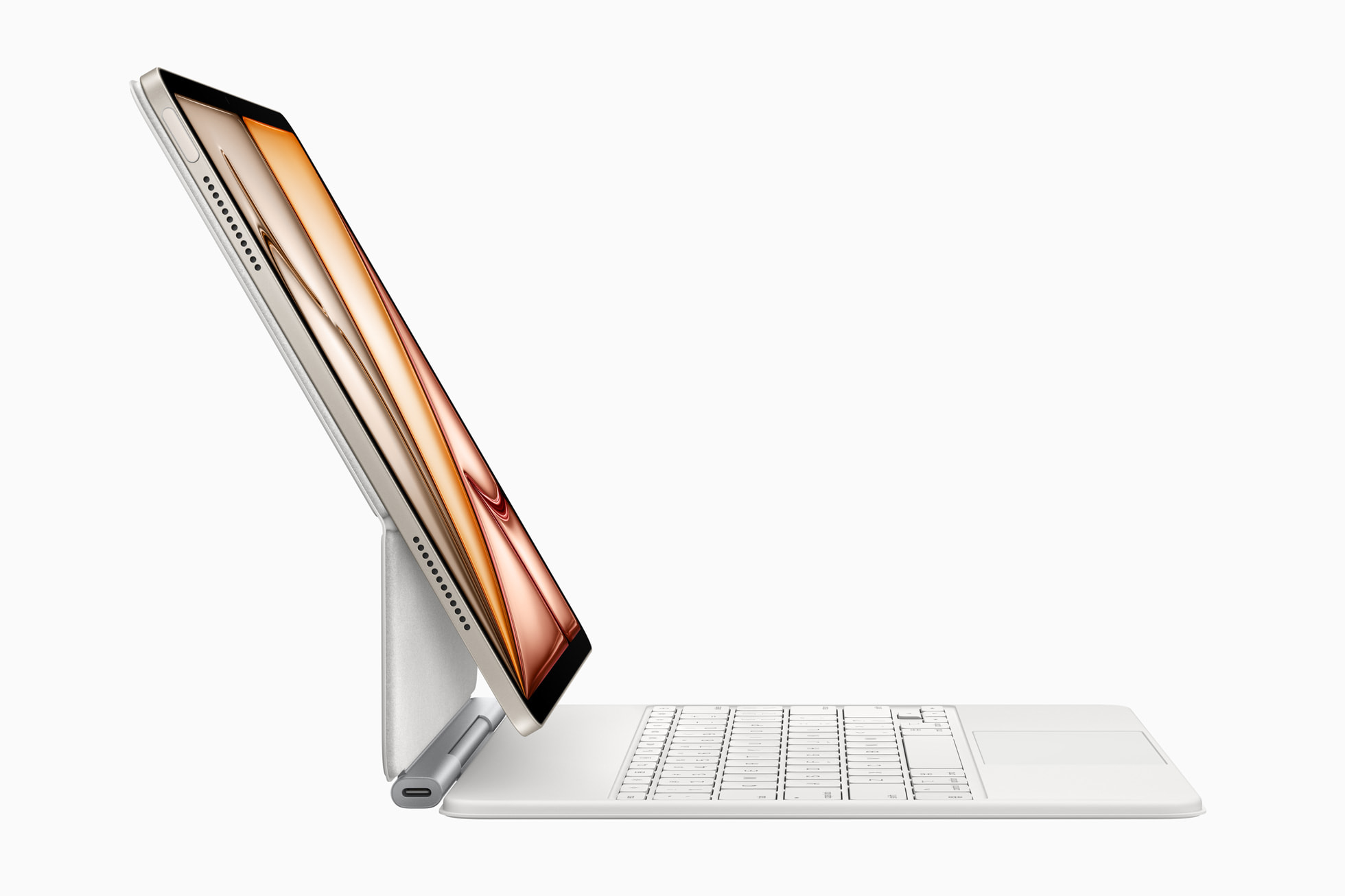
Accessories tell the same value story as the stylus. Samsung's Book Cover Keyboard costs around $200 and the Slim version around $140, per PhoneArena's review of the tablet, while Apple's Magic Keyboard for the 11-inch iPad Air costs $269 at launch. Both keyboards turn the tablet into a small laptop, and Apple's is the better typing experience, but Samsung's is cheaper and the tablet already includes the pen.
One more everyday detail: storage. The Tab S10 FE's microSD slot accepts cards up to 2TB per Samsung's product pages, so a $20 card can double or triple your storage. The iPad Air M3 has no expandable storage — if you outgrow 128 GB, your only options are paying Apple's storage prices up front or living in the cloud. Buyers who keep a lot of video offline should factor that in: the 128 GB iPad Air fills up faster than the 128 GB Tab S10 FE with a microSD card in it.
Who Should Buy — and Who Should NOT Buy
Buy the Samsung Galaxy Tab S10 FE if you:
- Want the best value: $499 at launch with the S Pen included and a 90 Hz display.
- Take handwritten notes and do not want to pay $79 to $129 extra for a stylus.
- Use a Samsung Galaxy phone or a Windows PC and want your devices to work together.
- Need expandable storage or IP68 durability for outdoor, kitchen or classroom use.
- Read or work outdoors, where the 800-nit display makes a real difference.
Buy the iPad Air M3 if you:
- Already own an iPhone or a Mac and want Continuity, AirDrop and the iPad app library.
- Edit video, draw professionally or run demanding creative apps that need the M3 chip.
- Want the best stylus experience with the Apple Pencil Pro, and the budget for it.
- Find the M3 discounted to around $499, where it matches the Tab S10 FE on price.
- Want the longest software support window of any tablet at this price.
Who Should NOT Buy Either Tablet
Skip both tablets if you need a laptop replacement for heavy desktop work — neither runs full desktop apps, and a $500 laptop will do more. Skip the iPad Air M3 at its full $599 launch price now that the iPad Air M4 exists at the same price with 12 GB of RAM. And skip the Tab S10 FE if your must-have apps are iPad-only, because no amount of hardware value makes up for missing software. If your budget is tighter, our Galaxy Tab S9 FE vs Galaxy Tab A9+ comparison covers two cheaper Samsung tablets, and our Galaxy Tab A9+ vs Lenovo Tab M11 guide covers the budget end of the market.
Common Mistakes to Avoid
1. Buying the iPad Air M3 at full price after the M4 launch
Apple announced the iPad Air M4 on March 2, 2026 at the same $599 starting price and discontinued the M3 the same day. Paying $599 for the older model now means paying new-model money for last year's tablet. The right way: only buy the M3 at a discount — around $499, where a November 9, 2026 deal report listed it — or buy the M4 instead.
2. Forgetting the Apple Pencil is not in the box
The iPad Air M3 does not include a stylus, and the Apple Pencil Pro costs $129 at launch. Buyers who budget $599 for a note-taking iPad often discover the real cost is $728. The right way: add the Pencil to your budget before comparing prices, or choose the Tab S10 FE, which includes the S Pen free.
3. Buying the 128 GB iPad Air without a storage plan
The iPad Air M3 has no microSD slot, and 128 GB fills quickly with apps, photos and offline video. The right way: if you keep a lot of media offline, buy the 256 GB model at $699 or plan on cloud storage — or pick the Tab S10 FE, where a cheap microSD card solves the problem.
4. Assuming a charger comes with the Tab S10 FE
Samsung ships the Tab S10 FE with a USB-C cable but no power adapter, even though the tablet supports 45 W fast charging. The right way: check whether you already own a 45 W USB-C charger, and budget for one if you do not, before comparing the two tablets' prices.
5. Choosing by chip speed alone
The M3 is much faster than the Exynos 1580, but chip speed only matters if your apps use it. Notes, reading, video and browsing run the same on both tablets. The right way: list the apps you actually use every day, check whether they exist and work well on your chosen platform, and let that decide — not a benchmark number.
Frequently Asked Questions
Which is better for students, the Tab S10 FE or the iPad Air M3?
For most students, the Galaxy Tab S10 FE is the better value because it costs $100 less at launch, includes the S Pen, and has a brighter 90 Hz display for reading and note-taking. The iPad Air M3 is better for students in creative courses who need apps such as Procreate or Final Cut Pro for iPad, which are iPad-only.
Can the Galaxy Tab S10 FE replace an iPad for drawing?
Mostly yes for notes and casual art, because the included S Pen is pressure-sensitive and Samsung's note apps are strong. For professional illustration, the iPad Air M3 with the Apple Pencil Pro is still ahead, thanks to the Pencil Pro's squeeze and barrel-roll gestures and the iPad's deeper library of drawing apps.
Does the Galaxy Tab S10 FE come with the S Pen?
Yes. The S Pen is included in the box with every Galaxy Tab S10 FE at no extra charge, and it needs no charging or pairing. It does not support Bluetooth Low Energy, so Air Actions such as remote camera control are not available — those need the S Pen Pro, sold separately.
Is the iPad Air M3 still worth buying after the M4 came out?
Yes, but only at a discount. Apple announced the iPad Air M4 on March 2, 2026 at the same $599 starting price and discontinued the M3, so paying full price for the M3 makes little sense. At around $499 — where a November 9, 2026 deal report listed it — the M3 is a good buy, because it offers the same design, display and cameras as the M4 for $100 less.
Which tablet has better battery life?
The Galaxy Tab S10 FE has the bigger battery at 8,000 mAh against 7,606 mAh in the iPad Air M3, and independent re-testing has measured around 20 hours of real-world use from the Samsung. Both tablets last a full day of mixed use. The Tab S10 FE also charges faster at 45 W, but its charger is sold separately, while the iPad Air includes a 20 W charger in the box.
Which tablet is better for kids and media watching?
The Galaxy Tab S10 FE is the better pick for kids and casual media use. Its IP68 rating survives spills and drops better, its 90 Hz display is brighter outdoors, and its microSD slot holds a large offline video library cheaply. The iPad Air M3 is better if your household already uses Apple services and parental controls through Family Sharing.
Sources & References
- Apple Newsroom — Apple introduces iPad Air with powerful M3 chip and new Magic Keyboard (March 4, 2025: $599 starting price, M3 performance claims, colors, storage options)
- PhoneArena — Samsung Galaxy Tab S10 FE vs Apple iPad Air M4 vs iPad Air M3 spec comparison (display, chip, battery, weight, prices)
- Samsung Galaxy Tab S10 FE product and support pages (samsung.com) — IP68, 90 Hz display, Exynos 1580, 8,000 mAh battery, 45 W charging, S Pen included, microSD support
- PhoneArena — Samsung Galaxy Tab S10 FE review (13 MP rear and 12 MP front cameras, no charger in the box, Book Cover Keyboard pricing)
- Deal report dated November 9, 2026 — 11-inch iPad Air M3 listed at $499 on Amazon (reported deal, not a price checked today)
Samsung Galaxy Tab S10 FE — check current price on Amazon
Apple iPad Air M3 11-inch Wi-Fi 256GB (Space Gray) — check current price on Amazon


0 Comments