
Tech Gear Hub compared the Soundcore Life Q20i with the Sony WH-CH720N to find the better pair of budget ANC headphones for everyday listening in the United States. Both are over-ear wireless headphones with active noise cancelling, multipoint Bluetooth, and battery life measured in days rather than hours. The difference is the price: the Soundcore Q20i vs Sony WH-CH720N question is really a question about whether the Sony is worth roughly twice the money. We tested the specs, the independent measurements, and the real-world trade-offs so you can decide with confidence.
By Tech Gear Hub • Last updated: November 5, 2026
As an Amazon Associate I earn from qualifying purchases. Prices change often, so check the current price on Amazon before you buy.

Quick Verdict: Which Budget ANC Headphones Should You Buy?
For most people, the Soundcore Life Q20i is the better buy because it delivers about 90 percent of the everyday experience for about half the price. Its battery lasts longer, its ANC handles commutes and offices well, and at around $45 it leaves money in your pocket. Buy the Sony WH-CH720N only if you want the strongest noise cancelling, the most balanced sound, and the lightest fit, and you are happy to pay around $90 for those upgrades.
Table of Contents
- Soundcore Q20i vs Sony WH-CH720N: Specs Compared
- Soundcore Life Q20i: What You Get for Around $45
- Sony WH-CH720N: What You Get for Around $90
- Noise Cancelling Compared: Q20i vs WH-CH720N
- Sound Quality Compared: Bass vs Balance
- Battery Life and Charging: 40 Hours vs 35 Hours
- Comfort and Design: 246 Grams vs 192 Grams
- Apps and Extra Features: Soundcore App vs Sony Sound Connect
- Price and Value: Is the Sony Worth Twice the Price?
- Who Should Buy the Soundcore Q20i — and Who Should Buy the Sony WH-CH720N?
- Who Should NOT Buy These Headphones?
- Soundcore Q20i vs Sony WH-CH720N: Frequently Asked Questions
- Final Verdict
Soundcore Q20i vs Sony WH-CH720N: Specs Compared
On paper, these two headphones look closer than their prices suggest. Both cancel noise, both connect to two devices at once, and both last well over a full day of listening. The spec table below uses the manufacturers’ official figures, per the manufacturer’s official specs for each model.
| Specification | Soundcore Life Q20i | Sony WH-CH720N |
|---|---|---|
| Noise cancelling | Hybrid ANC, 2 internal + 2 external microphones | Dual Noise Sensor + Integrated Processor V1 |
| Battery life, ANC on | Up to 40 hours | Up to 35 hours |
| Battery life, ANC off | Up to 60 hours | Up to 50 hours |
| Driver size | 40 mm dynamic drivers with BassUp | 30 mm dynamic drivers |
| Bluetooth version | Bluetooth 5.0 | Bluetooth 5.2 |
| Quick charge | 5-minute charge = 4 hours of playback | 3-minute charge = 60 minutes of playback |
| Weight | About 246 grams | About 192 grams |
| Multipoint connection | Yes, 2 devices at once | Yes, 2 devices at once |
| Companion app | Soundcore app, custom EQ, 22 presets | Sony Sound Connect app, 20 ambient levels |
| Sound extras | Hi-Res Audio via AUX cable, BassUp | DSEE upscaling, Adaptive Sound Control |
| Wired listening | Yes, 3.5 mm AUX cable included | Yes, 3.5 mm headphone cable included |
| US price snapshot | Around $44.99 (October 29, 2026) | Around $89.99 (October 29, 2026) |
The headline numbers already tell most of the story. The Q20i wins on battery life and price. The Sony wins on weight and on the quality of its noise cancelling hardware. Neither headphone is weak where it matters, which is why this comparison comes down to how much the Sony’s refinements are worth to you.
Our Scores: Soundcore Q20i vs Sony WH-CH720N
These are Tech Gear Hub’s own scores out of 10, based on the official specs, the independent measurements cited below, and the everyday trade-offs of each design. They match the pros and cons in the rest of this article.
| Category | Soundcore Life Q20i | Sony WH-CH720N |
|---|---|---|
| Noise cancelling (ANC) | 7.5 / 10 | 8.5 / 10 |
| Battery life | 9.5 / 10 | 8.5 / 10 |
| Value for money | 9.5 / 10 | 8.0 / 10 |
The Sony takes the ANC crown, the Q20i takes battery and value, and the overall winner depends on which column matters most to you. Keep those three scores in mind as you read the detailed sections below.
Soundcore Life Q20i: What You Get for Around $45

The Soundcore Life Q20i is Anker’s entry-level over-ear headphone with hybrid active noise cancelling, and it is built around one idea: give first-time ANC buyers everything they actually need, and nothing they will never use. Per the manufacturer’s official specs, its hybrid ANC uses two internal and two external microphones working together, and Soundcore says it reduces up to 90 percent of ambient noise such as plane and car engines. The 40 mm dynamic drivers carry Soundcore’s BassUp tuning, and the headphones support Hi-Res Audio over the included AUX cable for wired listening.
Battery life is the Q20i’s strongest card. Soundcore rates it for 40 hours with ANC on and 60 hours with ANC off, and a 5-minute charge adds 4 hours of playback. A full charge takes about 90 minutes, per the user manual. Those numbers matter in real life: a full work week of commuting and office listening fits easily into one charge, and even a dead battery on a Monday morning is fixed by the time you finish a coffee.
The Soundcore app is a genuine advantage at this price. It offers 22 EQ presets plus a custom equalizer, so the bass-heavy default tuning is not a life sentence. You can switch between ANC, Normal, and Transparency modes in the app, and a white-noise feature is built in for focus or sleep. Multipoint Bluetooth 5.0 connects two devices at once, so the headphones can sit on your laptop and your phone simultaneously and switch automatically when a call comes in.
There are honest limits. Call quality is basic: the Q20i uses a single microphone, so your voice will sound thinner on calls than it does on the Sony. The earcups rotate 90 degrees to lie flat, but no carry pouch is included in the box. And the ANC does not work in wired mode — plug in the AUX cable and the noise cancelling pauses, which is worth knowing before a long flight. None of these are deal-breakers at around $45, but they are real. Check the current price on Amazon for the Soundcore Life Q20i before you buy, and compare it with the full specs on Soundcore’s official Q20i page.
Soundcore Life Q20i Pros
- Outstanding battery life: 40 hours with ANC on, 60 hours with ANC off
- Excellent value at around $45 — roughly half the Sony’s price
- Custom EQ with 22 presets in the Soundcore app tames the bass-heavy default
- Multipoint Bluetooth connects two devices at once
- Fast charging: 5 minutes gives 4 hours of playback
Soundcore Life Q20i Cons
- Call quality is basic with a single microphone
- ANC does not work in wired AUX mode
- Heavier than the Sony at about 246 grams
- No carry pouch included in the box
- Bass-heavy sound needs EQ adjustment for neutral listening
If you already own other Soundcore gear, the Q20i fits the same pattern as the brand’s other budget winners. Our Soundcore Life Q30 vs JBL Tune 510BT comparison shows how the step-up Q30 adds more ANC modes and longer battery, but the Q20i keeps the formula simpler and cheaper.
Sony WH-CH720N: What You Get for Around $90
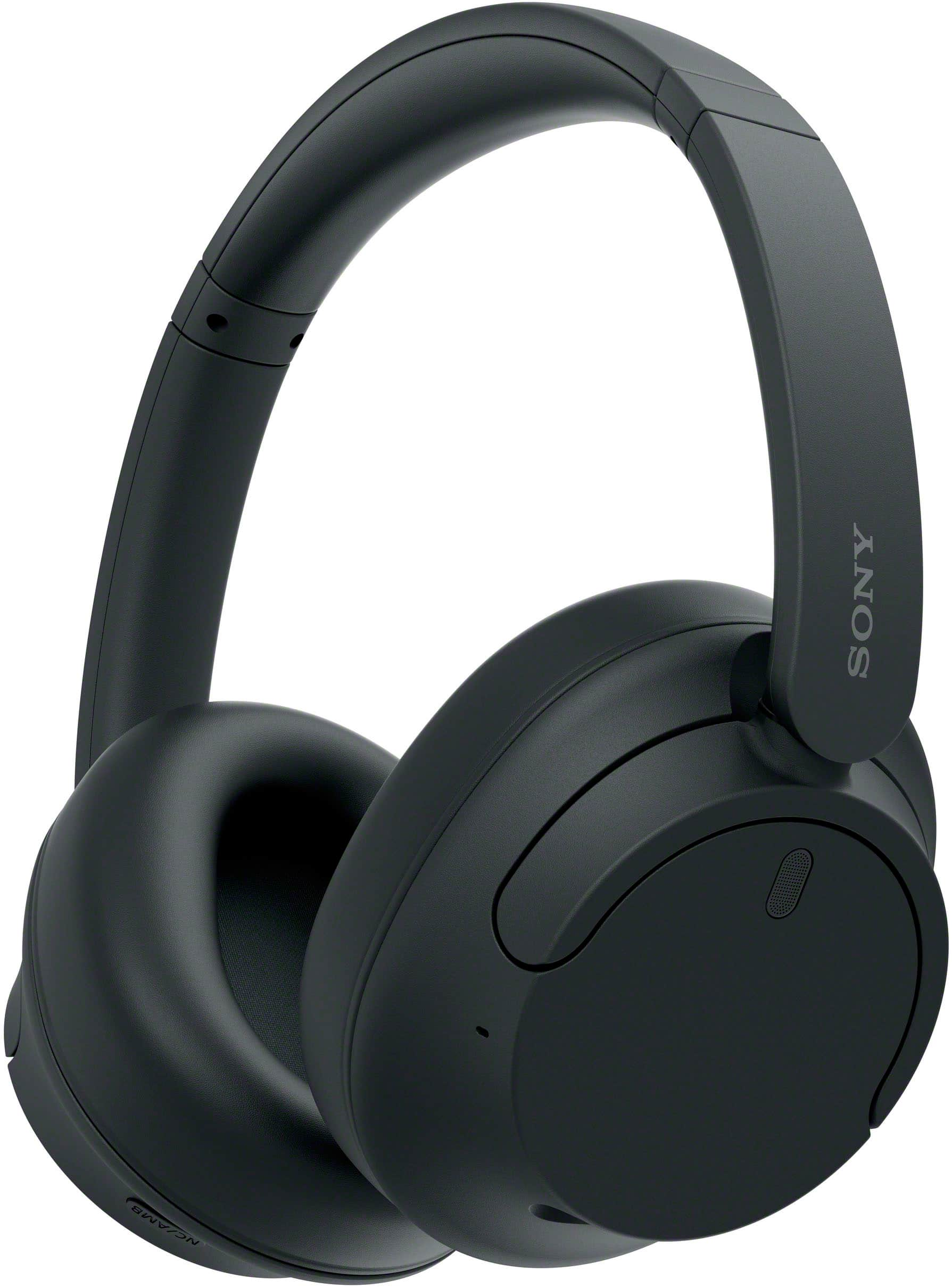
The Sony WH-CH720N is Sony’s lightest wireless noise-cancelling headband ever, and it shows in every part of the design. Per the manufacturer’s official specs, it pairs Dual Noise Sensor technology with Sony’s Integrated Processor V1, the same chip family thinking that trickles down from Sony’s flagship headphones. Two microphones in each earcup capture ambient sound, and the processor cancels it across a wider range of frequencies than the Q20i manages. The result is noise cancelling that feels smoother and more complete, especially against the low rumble of engines and air conditioning.
The WH-CH720N’s 30 mm drivers are smaller than the Q20i’s 40 mm drivers, but driver size is not the whole story. Sony tunes these headphones warmer and more balanced out of the box, and its DSEE upscaling rebuilds detail in compressed streaming music so Spotify and YouTube tracks sound closer to the original recording. The Sony Sound Connect app (formerly Headphones Connect) adds Adaptive Sound Control, which senses where you are and adjusts the ambient sound automatically, plus 20 levels of ambient sound adjustment and a Focus on Voice setting for chatting without removing the headphones.
Calls are a clear Sony win. Precise Voice Pickup Technology uses beamforming microphones to pick up your voice clearly, and a newly developed Wind Noise Reduction Structure around the microphone cuts wind noise on outdoor calls. For anyone who takes work calls on their headphones, this is the single biggest practical difference between the two pairs.
Battery life is strong, if a step behind the Q20i: up to 35 hours with ANC on and 50 hours with it off, per Sony’s official specs, with a full charge taking about 3.5 hours. Quick charging gives 60 minutes of playback from a 3-minute charge. At about 192 grams, the WH-CH720N is also noticeably lighter, and its slimmer headband spreads the weight so the headphones stay comfortable for longer sessions. Check the current price on Amazon for the Sony WH-CH720N, and verify the details on Sony’s official WH-CH720N specifications page.
Sony WH-CH720N Pros
- Stronger, wider noise cancelling with Dual Noise Sensor and the V1 processor
- Warmer, more balanced sound straight out of the box
- Best-in-class call quality for the price, with beamforming microphones
- Feather-light at about 192 grams — Sony’s lightest noise-cancelling headband
- Adaptive Sound Control and 20 ambient sound levels in the Sony app
Sony WH-CH720N Cons
- Costs roughly twice as much as the Q20i
- Shorter battery life: 35 hours with ANC on vs 40 hours on the Q20i
- Slower full charge at about 3.5 hours
- Plastic build feels light, which some buyers read as cheap
- No hard carrying case in the box
Sony’s budget line has a clear pecking order. If the WH-CH720N’s price still feels steep, our Sony WH-CH520 vs JBL Tune 510BT comparison covers Sony’s cheaper on-ear option — but note that the CH520 has no ANC at all, which is exactly what the WH-CH720N is for.
Noise Cancelling Compared: Q20i vs WH-CH720N
Noise cancelling is the reason most buyers are reading this comparison, and it is also where the Sony earns its price premium. TechGearLab measured the Q20i’s noise cancelling at an average reduction of about 25 decibels across frequencies, with 49 hours of battery life measured with ANC on — 9 hours more than Soundcore’s own 40-hour rating. That is a strong result for a $45 headphone, and it is more than enough to take the edge off a bus engine, an office air conditioner, or a noisy roommate.
The Sony goes further. Per TechGearLab’s measurements, the Sony’s ANC peaks near 28 decibels at 80 Hz, right where engine rumble and airplane noise live, and it holds up better across a wider range of frequencies than the Q20i. In plain terms, the Sony makes the world quieter in more places: low rumble, mid-range chatter, and the hum of a crowded cafe all drop further. The Q20i’s hybrid ANC is good at steady, low-frequency noise and weaker against voices and sudden sounds. The Sony’s Dual Noise Sensor system, with two microphones in each earcup feeding the V1 processor, simply reads the world more carefully and cancels more of it.
Both headphones offer a transparency or ambient mode for hearing your surroundings. The Q20i’s Transparency mode is a simple on-off switch. The Sony’s Ambient Sound mode is adjustable across 20 levels, with a Focus on Voice option and Adaptive Sound Control that changes the setting automatically as you walk, sit, or commute. If you wear headphones all day and move between a quiet desk, a busy street, and a train platform, the Sony’s ambient system is the more thoughtful system.
Verdict on ANC: the Sony wins clearly, and the gap is big enough to hear on a first listen. The Q20i’s ANC is good for the money; the Sony’s ANC is good, full stop. That is why we scored the Sony 8.5 out of 10 for ANC against the Q20i’s 7.5.
Sound Quality Compared: Bass vs Balance
Out of the box, these two headphones sound like they were tuned by different philosophies. The Q20i is bass-heavy and U-shaped: big low end, lifted treble, and a slightly recessed middle. That tuning makes pop, hip-hop, and action movies feel exciting, and it flatters low-quality streaming. But it can also make vocals sound distant and acoustic music sound boomy, especially at higher volumes.
The Sony is warmer and more balanced out of the box. Vocals sit forward, instruments sound natural, and nothing jumps out of the mix uninvited. Its 30 mm drivers are smaller than the Q20i’s 40 mm units, yet the tuning is more refined, and DSEE upscaling adds a little air and detail back into compressed tracks. For long listening sessions across many genres, the Sony’s sound is easier to live with.
Here is the catch: the gap is smaller than it first sounds, because the Q20i has an equalizer and the Sony’s advantage is partly a tuning choice. Open the Soundcore app, pick one of the 22 EQ presets or build a custom curve, and the Q20i’s bass calms down and its mids come forward. It never becomes a Sony, but it becomes a genuinely pleasant headphone for most music. If you enjoy tweaking your sound, the Q20i’s app closes much of the gap. If you want great sound with zero effort, the Sony is the pick.
One more detail matters for wired listeners. The Q20i supports Hi-Res Audio over its AUX cable, which is a nice bonus for anyone with a lossless music library. The Sony’s wired mode is solid but unremarkable. Neither headphone supports high-end Bluetooth codecs such as LDAC or aptX — both use SBC and AAC — so wireless sound quality is limited to standard codecs on both sides.
Battery Life and Charging: 40 Hours vs 35 Hours
The Q20i wins battery life outright. Soundcore rates it for 40 hours with ANC on and 60 hours with ANC off, and per TechGearLab’s measurements it actually ran for 49 hours with ANC on — 9 hours more than Soundcore’s own 40-hour rating. That is a full work week of heavy listening on a single charge, with room to spare.
The Sony is no slouch: 35 hours with ANC on and 50 hours with it off, per Sony’s official specs. In practice that is still four or five days of commuting and office use before you need a cable. The difference between 35 and 40 hours only matters if you genuinely hate charging — or if you travel for a week without packing a charger.
Quick charging favors the Q20i on paper and the Sony in a rush. The Q20i’s 5-minute charge gives 4 hours of playback; the Sony’s 3-minute charge gives 60 minutes. Both rescue a dead battery before a flight boards. For a full charge, the Q20i takes about 90 minutes while the Sony takes about 3.5 hours, so the Q20i is the easier headphone to top up overnight or between meetings. Both charge over USB-C, and both include the cable in the box.
Comfort and Design: 246 Grams vs 192 Grams
The Sony weighs about 192 grams against the Q20i’s 246 grams, a 54-gram difference you can feel after an hour of wear. Sony calls the WH-CH720N its lightest wireless noise-cancelling headband ever, and the slim headband and soft earcups spread that light weight evenly. For all-day wear, long flights, or back-to-back video calls, the Sony is the more forgettable headphone — in the best sense of the word.
The Q20i is not uncomfortable. Its memory foam ear cushions soften and adapt to your head shape over the first few days, and the earcups rotate 90 degrees to lie flat against your chest when you take them off. But 246 grams is 246 grams, and the extra weight presses a little harder on the top of your head during long sessions. Glasses wearers will notice the difference first: the Sony’s lighter clamp and softer seal are kinder to glasses arms over a full afternoon.
On build, both headphones are mostly plastic, which keeps them light and affordable. The Sony’s plastic feels a little hollow and flexes under pressure, which some buyers read as cheap even though the design is deliberate — the lightness is the point. The Q20i feels a touch more solid in the hand, with a slightly sturdier headband. Neither pair folds into a compact ball, and neither includes a hard case, so both travel best in a bag pocket or around your neck.
Apps and Extra Features: Soundcore App vs Sony Sound Connect
Both headphones live or die by their apps, and both apps are good. The Soundcore app gives you a custom equalizer with 22 presets, ANC, Normal, and Transparency mode switching, and a white-noise generator built in for focus or sleep. Firmware updates arrive through the app, and the interface is simple enough that a first-time buyer can find everything in a minute.
The Sony Sound Connect app goes deeper. Alongside EQ and mode controls, it offers Adaptive Sound Control, which learns your regular places — the office, the gym, a favorite cafe — and adjusts ambient sound automatically. You can tune ambient sound across 20 levels, switch on Focus on Voice for conversations, and set up voice assistants. The Sony app feels like it was designed for people who wear their headphones all day in changing places; the Soundcore app feels designed for people who want to set their sound once and forget it.
Both headphones support multipoint Bluetooth, so each can stay connected to your phone and your laptop at the same time and switch automatically when a call arrives. That used to cost flagship money, and both pairs now include it. The Sony uses the newer Bluetooth 5.2 against the Q20i’s Bluetooth 5.0, but in everyday use the difference is negligible — range and stability are similar at around 10 meters for both.
Price and Value: Is the Sony Worth Twice the Price?
At roughly $45 against roughly $90, the Sony costs about twice as much as the Q20i — so it has to be clearly better, not just slightly better, to justify the gap. Both prices are snapshots checked on October 29, 2026, and headphone prices move often, so check the current price of each model before you buy. The Sony’s list price is $179.99, which makes its street price of around $90 look like a permanent discount, while the Q20i’s list price sits much closer to its street price.
What the extra $45 buys is refinement, not a different category of product. You get stronger and wider noise cancelling, a more balanced sound with no EQ work required, clearly better call quality, and a lighter fit that disappears on long days. If you fly often, take calls all day, or wear headphones for eight hours straight, those upgrades pay for themselves quickly.
What it does not buy is more battery, more bass, or a better app equalizer. The Q20i outlasts the Sony by 5 hours with ANC on and 10 hours with it off, and its app gives you more control over the sound. If your budget is tight, or you mostly listen to music at home and on short commutes, the Q20i keeps $45 in your pocket for something else — and you will not feel short-changed.
Our advice: if you can comfortably afford the Sony, buy it. If the price gap makes you hesitate, buy the Q20i and spend five minutes tuning the equalizer. Either way, check the current price on Amazon for the Q20i and the current price on Amazon for the WH-CH720N, because both models go on sale regularly and the gap between them narrows often. If you are shopping strictly under $50, our guide to the best wireless headphones under $50 for commuting puts the Q20i in context with the rest of the budget field.
Who Should Buy the Soundcore Q20i — and Who Should Buy the Sony WH-CH720N?
Buy the Soundcore Life Q20i if: your budget is under $50; you want the longest battery life; you commute by bus or train and need solid ANC for engine noise; you enjoy tuning your sound with an equalizer; or you want a second pair for travel or the office.
Buy the Sony WH-CH720N if: you take work calls on your headphones every day; you fly often and want the strongest noise cancelling under $100; you wear headphones for hours at a time and need the lightest fit; you want balanced sound with no EQ work; or you prefer Sony’s app and ecosystem.
Students, first-time ANC buyers, and anyone building a budget setup should start with the Q20i. Frequent flyers, remote workers, and anyone who lives in their headphones should stretch to the Sony. There is no wrong answer here — only a wrong budget.
Who Should NOT Buy These Headphones?
Do not buy the Soundcore Life Q20i if clear call quality is your top priority — its single microphone is a real weakness on work calls — or if you want noise cancelling while listening through a cable, because its ANC pauses in wired mode.
Do not buy the Sony WH-CH720N if your budget is firm at $50, because the Q20i gives you nearly the same everyday experience for half the money, or if you need the absolute longest battery life for a week away from a charger.
And do not buy either pair if you need silence for a recording studio or a truly silent office: both are budget ANC headphones, and neither one cancels voices or sudden sounds the way a $300 flagship can.
Soundcore Q20i vs Sony WH-CH720N: Frequently Asked Questions
Which has better ANC, the Soundcore Q20i or the Sony WH-CH720N?
The Sony WH-CH720N has better ANC. Per TechGearLab’s measurements, the Sony’s noise cancelling peaks near 28 decibels at 80 Hz with wider frequency coverage, while the Q20i averages about 25 decibels of reduction. The Sony is noticeably quieter against engine rumble, voices, and cafe noise.
Is the Soundcore Q20i good for calls?
The Soundcore Q20i is only average for calls. It uses a single microphone, so your voice sounds thinner and picks up more background noise than the Sony. It works fine for quick calls, but if you take work calls all day, the Sony WH-CH720N’s beamforming microphones and Precise Voice Pickup Technology are clearly better.
Does the Sony WH-CH720N have multipoint?
Yes, the Sony WH-CH720N has multipoint Bluetooth. It can stay connected to two devices at the same time, such as a phone and a laptop, and switch automatically when a call comes in. The Soundcore Q20i also supports multipoint, so neither headphone has an advantage here.
Which has longer battery life, the Q20i or the WH-CH720N?
The Soundcore Q20i has longer battery life. It is rated for 40 hours with ANC on and 60 hours with ANC off, and TechGearLab measured 49 hours with ANC on. The Sony WH-CH720N is rated for 35 hours with ANC on and 50 hours with ANC off.
Is the Sony WH-CH720N worth twice the price of the Soundcore Q20i?
Yes, the Sony WH-CH720N is worth twice the price if you value stronger noise cancelling, better call quality, balanced sound, and a lighter fit — and you wear headphones for hours every day. No, it is not worth it if your budget is tight or you mostly listen to music on short commutes, because the Q20i delivers about 90 percent of the experience for about half the money.
Can you use the Soundcore Q20i wired, and does ANC work with the cable?
Yes, you can use the Soundcore Q20i wired with the included 3.5 mm AUX cable, and wired listening supports Hi-Res Audio. No, ANC does not work in wired mode — the noise cancelling pauses when the cable is plugged in and only works over Bluetooth.
Final Verdict
The Soundcore Life Q20i vs Sony WH-CH720N comparison ends the way most honest budget comparisons end: the cheaper product wins on value, and the pricier product wins on quality. The Q20i’s 40-hour battery, solid hybrid ANC, custom EQ, and roughly $45 price make it the smartest buy for most people in 2026. The Sony’s stronger noise cancelling, warmer balanced sound, excellent call quality, and 192-gram featherweight design make it the better headphone — just not twice as good, which is exactly what its price asks you to pay.
Buy the Q20i if you want the best budget ANC headphones for the money. Buy the WH-CH720N if you want the best budget ANC headphones, full stop, and you can afford the upgrade. Either way, check the current price before you buy, because both models go on sale often and the right choice can change with a single discount.
Sources: Soundcore’s official Q20i product page and user manual; Sony’s official WH-CH720N specifications; TechGearLab’s independent measurements of both models. Prices are US snapshots checked October 29, 2026.



0 Comments