
Tech Gear Hub compared the Canon PowerShot G7 X Mark III with the Sony ZV-1 to answer one question: in the canon g7x mark iii vs sony zv-1 matchup, which pocket vlogging camera is the better buy in 2026? Both pack the same 20.1MP 1-inch sensor and f/1.8–2.8 lens into a pocket body. The difference is not image quality. It is workflow — and, in 2026, price.
By Tech Gear Hub • Last updated: November 23, 2026
As an Amazon Associate, Tech Gear Hub earns from qualifying purchases made through links on this page, at no extra cost to you. Prices below were checked November 23, 2026 — always check the current price before buying.
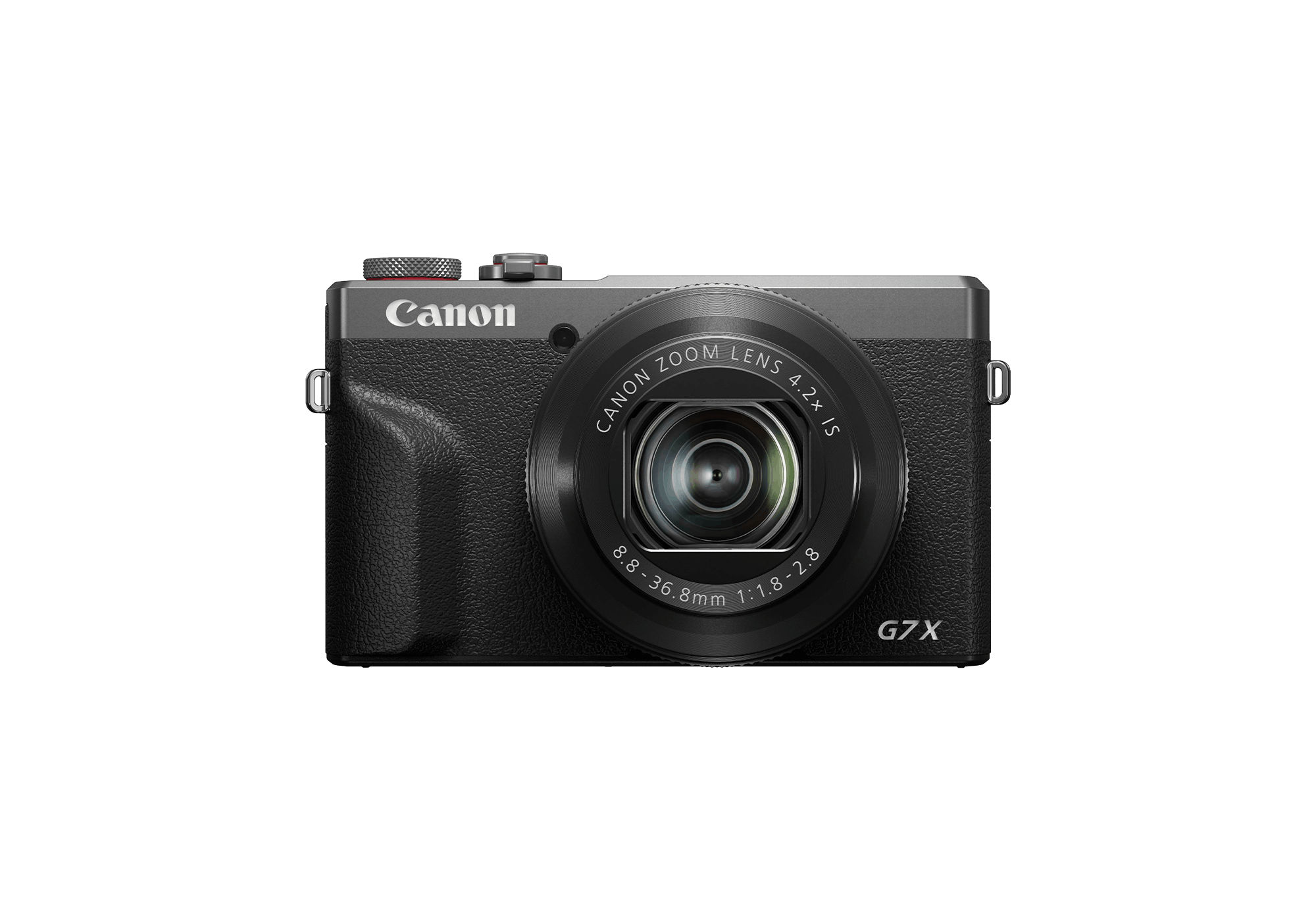
The Canon PowerShot G7 X Mark III (Canon official photo).
Table of Contents
- Canon G7X Mark III vs Sony ZV-1: At a Glance
- Sensor & Image Quality
- Lens & Zoom
- Autofocus
- Video: The 4K Crop Problem
- Audio
- Battery & Usability
- Price & Value in 2026
- Who Should Buy Which
- Who Should NOT Buy
- Common Mistakes to Avoid
- Frequently Asked Questions
- Sources & References
Canon G7X Mark III vs Sony ZV-1: At a Glance
Both launched within a year of each other — Canon in July 2019, Sony in May 2020 — and both remain the default pocket-vlogging recommendation. Here is how the official specs line up.
| Spec | Canon PowerShot G7 X Mark III | Sony ZV-1 |
|---|---|---|
| Sensor | 20.1MP 1-inch BSI-CMOS | 20.1MP 1-inch Stacked CMOS |
| Lens (35mm equiv.) | 24–100mm, f/1.8–2.8 | 24–70mm, f/1.8–2.8 |
| Processor | DIGIC 8 | Bionz X |
| 4K video | 4K/30, 1.6x crop | 4K/30, no crop |
| Slow motion | 1080p up to 120fps | 1080p up to 120fps |
| Autofocus | Dual Pixel AF | Eye AF + Tracking |
| Picture profiles | Standard Canon profiles | S-Log2 and S-Log3 |
| Microphone | 3.5mm mic input | 3.5mm mic input; 3-capsule mic |
| Screen | Tilting touchscreen | Side flip-out screen |
| Battery (CIPA) | NB-13L, 235 shots | NP-BX1, 260 shots |
| Weight | 304g (10.7 oz) | 294g (10.4 oz) |
| Live streaming | Direct to YouTube | USB webcam only |
| Launch price | $749 | $800 |
| Nov 23, 2026 price | About $1,529.95 on Amazon | $844.94 on Amazon |
| DPReview score | 81% | 85% |
Our scores — our specification-based assessment, against the official specs and DPReview: Autofocus for vlogging — Canon 7.5/10, Sony 9/10. Video flexibility — Canon 7/10, Sony 8.5/10. Value in 2026 — Canon 5.5/10, Sony 8.5/10.
Sensor & Image Quality
This section is a tie in most real vlogging situations. Both use a 20.1MP 1-inch sensor, shoot the same 5472 × 3648 stills, and cover the same ISO range up to 12800 natively. DPReview scored both cameras' RAW quality at 8.0/10 and JPEG within a few tenths of each other (Canon 7.5, Sony 7.8).
The Sony's stacked sensor reads out faster, which is part of why its autofocus and full-width 4K work the way they do. For photos, the Canon has two small edges: a built-in flash, which the ZV-1 lacks, and a 30fps burst against the Sony's 24fps, per DPReview. For stills-first buyers, an interchangeable-lens camera gives far more room to grow — see our Canon EOS R50 review.
Lens & Zoom
This is the Canon's clearest win. Its lens runs 24–100mm, against the Sony's 24–70mm, with the same bright f/1.8–2.8 aperture across the range. That extra 30mm means tighter framing from the same distance and more reach for travel shots where you cannot walk closer.
At the wide end, where vloggers live, both are identical at 24mm — until you record in 4K on the Canon, where the crop narrows the view. In 1080p the Canon keeps its full 24mm, so the zoom advantage is real for Full HD filming and stills. The Sony's 24–70mm covers the selfie shot, the walk-and-talk, and the product-in-hand shot.
Autofocus
This is the Sony's clearest win, and for vloggers it matters more than the zoom. The ZV-1 has Real-time Eye AF and Real-time Tracking: once it finds your eye, it stays on it while you move or hold a product up to the lens, and Product Showcase mode shifts focus to the object, then back to your face.
The Canon's Dual Pixel AF finds a face and holds it in good light, but it has no persistent eye tracking. Per the official specs and DPReview's verdict that the Canon's video autofocus is "so-so", expect more hunting as you move toward or away from the camera. For a talking-head video in one spot, the gap is small; for walk-and-talk vlogging, you will notice it every day.
If eye tracking tops your list, our Sony ZV-E10 II vs Canon EOS R50 comparison shows the current generation — at a higher price, and not pocketable.
Video: The 4K Crop Problem
Both record 4K at 30fps and 1080p at up to 120fps. The difference is what happens in 4K: the Canon applies a 1.6x crop, turning its 24mm wide end into roughly a 38mm field of view. At arm's length, that is your head and shoulders fitting in frame — or your forehead getting cut off.
The Sony records 4K with no crop, using full-pixel readout, per Sony's official specs — your 24mm stays 24mm. It also offers S-Log2 and S-Log3 profiles for grading, which the Canon does not. Where the Canon fights back is livestreaming: it streams straight to YouTube, a feature DPReview praised. If your channel is built on live streams, that can outweigh the crop.
For rough outdoor filming, neither pocket camera is the right tool — see our GoPro Hero 13 Black vs DJI Osmo Action 5 Pro comparison.
Audio
Bad audio kills more vlogs than soft focus. Both cameras have a 3.5mm microphone input — confirmed on Sony's own product page and in DPReview's side-by-side table — so either takes an external mic.
The Sony's built-in mic is a directional 3-capsule design that focuses on sound from in front of the camera — from you — and ships with a furry windscreen that cuts wind noise outdoors. Per Sony's official specs, that is why the ZV-1 sounds noticeably better than a phone straight out of the box. The Canon's built-in stereo mic is fine indoors and unremarkable outside, so Canon owners reach for an external mic sooner. Either way, use the windscreen or an external mic outdoors — and note neither camera has a headphone jack, per DPReview.

The Sony ZV-1 with its flip-out screen and directional microphone.
Battery & Usability
Neither camera is a battery champion. The Canon's NB-13L is rated for about 235 shots per charge (CIPA), or roughly 70–80 minutes of continuous 1080p recording. The Sony's NP-BX1 is rated for about 260 shots (CIPA), per DPReview — but both need a spare battery or USB power bank on a serious shooting day.
What you will feel is the screen: the Sony's display fully articulates out to the side, so you can see yourself while filming and the screen never blocks the hot shoe. The Canon's screen tilts up 180 degrees, which works for selfie framing but blocks accessory mounting. Both have touchscreens, charge over USB, and fit a pocket.

The Sony ZV-1 creator kit with shooting grip and wireless microphones.
Price & Value in 2026
This is where the comparison stops being close. The Canon launched at $749 in 2019. On Amazon, its current price is about $1,529.95 (checked November 23, 2026, per pricehistory.app) — roughly double its launch price. Its lowest price ever was $1,269 and its average is around $1,471. A brief $749 restock was seen on September 7, 2026, per shopsavvy.
The Sony ZV-1 launched at $800 in 2020. On Amazon, its current price is $844.94 (checked November 23, 2026, per pricehistory.app), against a list price of $899.99. Its lowest price ever was $471 and its average is around $729.36. Check the current price of the Sony ZV-1 on Amazon.
Side by side, the Sony costs roughly half the Canon — about $845 against about $1,530 — while winning on autofocus, 4K, picture profiles, and built-in audio. The Canon is not a bad camera; it is a good camera at a bad price. It only makes sense if the 100mm zoom or livestreaming earns you money the Sony cannot, or if you catch a rare $749 restock. Our Canon EOS R50 vs Nikon Z30 comparison covers two interchangeable-lens cameras cheaper than the Canon's current street price. If you do buy the Canon, check its current price on Amazon first.
Who Should Buy Which
Buy the Sony ZV-1 if you film yourself talking to the camera for YouTube, TikTok, or Instagram. Its Eye AF keeps you in focus, its uncropped 4K keeps framing honest, its built-in mic sounds good with no extra gear, and at $844.94 (checked November 23, 2026) it leaves hundreds for a spare battery or a mic.
Buy the Canon G7 X Mark III if you specifically need the 100mm zoom — travel, events, or product shots where you cannot step closer — or if direct YouTube livestreaming is core to how you publish. Its stills perks — built-in flash, 30fps burst — help too. Either catch a restock near its $749 launch price or accept paying about $1,529.95 (checked November 23, 2026) — roughly $685 more than the Sony.
Who Should NOT Buy
Do not buy either camera if you mainly film action, sports, or anything in rain and dust — you need a rugged action camera. Do not buy the Canon at its current price if you only film yourself talking at arm's length in 4K: the crop and the $1,530 price tag both work against you. Do not buy the Sony if you need a long zoom or one-touch livestreaming. If you might want different lenses within a year, skip both.
Common Mistakes to Avoid
1. Buying the Canon for 4K selfie vlogging without knowing about the crop. The 1.6x crop turns the 24mm wide end into roughly 38mm, so your forehead can end up out of frame at arm's length. Test the framing first — or buy the Sony.
2. Paying the Canon's scarcity price without checking for a restock. At about $1,529.95 (checked November 23, 2026), the Canon costs double its launch price. A $749 restock was seen as recently as September 7, 2026. Check the price and set an alert.
3. Assuming the built-in mic is enough outdoors. The Sony's directional mic is good, but wind still ruins audio on both cameras. Use the included windscreen, or budget for an external mic with either camera, before your first outdoor shoot.
4. Choosing on sensor specs alone. Both share a 20.1MP 1-inch sensor, so "better image quality" will not decide this. Choose on workflow: autofocus and 4K point to Sony, zoom and livestreaming to Canon, and price to Sony for almost everyone.
Frequently Asked Questions
Which is better for vlogging, the Canon G7 X Mark III or the Sony ZV-1?
The Sony ZV-1, for most vloggers. Its Eye AF holds focus while you move, it films 4K with no crop, and its directional mic sounds better out of the box. The Canon only wins on zoom or livestreaming.
Does the Canon G7 X Mark III crop in 4K?
Yes. The Canon applies a 1.6x crop in 4K/30, narrowing the 24mm wide end to roughly 38mm. The Sony records 4K/30 with no crop, using full-pixel readout.
Why is the Canon G7 X Mark III so expensive in 2026?
It launched at $749 but now sells for about $1,529.95 on Amazon (checked November 23, 2026) because it is scarce and vlogger demand stayed high. Lowest ever: $1,269; a brief $749 restock was seen on September 7, 2026.
Does the Sony ZV-1 have a microphone jack?
Yes. The ZV-1 has a 3.5mm microphone input, confirmed on Sony's official product page and by DPReview. It also has a directional 3-capsule built-in mic with a windscreen.
Is the Sony ZV-1 good for beginners?
Yes. It has a flip-out screen you can see while filming, one-touch background defocus, Product Showcase mode, and Eye AF that tracks you without manual adjustments.
Should I buy the Canon G7 X Mark III or wait?
Wait, unless you need the 100mm zoom or YouTube livestreaming now. At about $1,529.95 (checked November 23, 2026) the Canon costs roughly double the Sony ZV-1. Set a price alert — or buy the Sony today.
Sources & References
- DPReview — Canon PowerShot G7 X Mark III vs Sony ZV-1 side-by-side comparison (specs, scores, CIPA ratings, burst rates, screen, flash)
- Sony Electronics — Sony ZV-1 official product page (sensor, lens, Eye AF, S-Log, mic input)
- Amazon listings — Canon G7 X Mark III (B07TKNCQZL) and Sony ZV-1 (B08965JV8D), via pricehistory.app and Squatio, checked November 23, 2026
- pricehistory.app — Amazon prices for both cameras, checked November 23, 2026


0 Comments