By Tech Gear Hub • Last updated: November 3, 2026
As an Amazon Associate I earn from qualifying purchases. Prices change often, so please check the current price on Amazon before you buy.
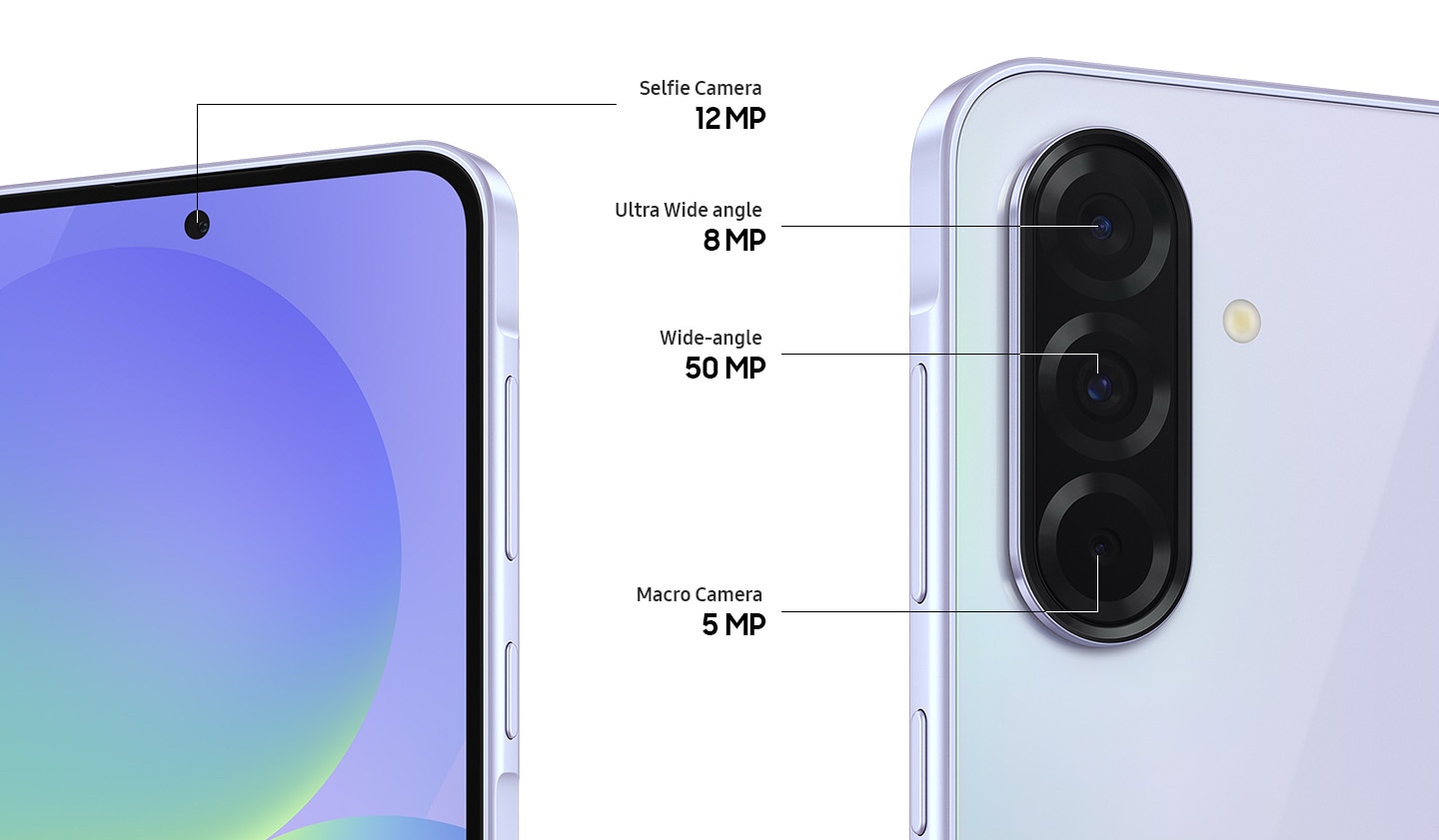
The Samsung Galaxy A36 5G camera system: 50MP wide, 8MP ultra-wide, 5MP macro, and a 12MP selfie camera. Photo: Samsung official product page.
Quick Verdict
For most people, the choice splits cleanly: the Google Pixel 9a is the better buy because of its superior camera and 7 years of updates, while the Samsung Galaxy A36 5G is the better buy if you want a bigger screen, faster 45W charging, and a lower street price.
Contents
Tech Gear Hub compared the Samsung Galaxy A36 5G with the Google Pixel 9a to find the best budget Android phone in the mobile category for 2026. Both phones launched in early 2025 at prices far below flagships, and both have fallen since: the A36 launched in the US at $399.99 and is now often found for roughly $240 to $300, while the Pixel 9a launched at $499 and is now $399. Check the current price before you buy, because street prices on both move with sales.
The headline numbers frame the trade-off. The Galaxy A36 5G has a larger 6.7-inch Super AMOLED 120Hz display and 45W charging for its 5000mAh battery, while the Pixel 9a has a slightly larger 5100mAh battery, a brighter 6.3-inch OLED display, and Google's Tensor G4 chip with 7 years of updates against the A36's 6 years. The A36 is also thinner at 7.4mm against the 9a's 8.9mm, though slightly heavier at 195g against 186g.
At a Glance: Specs and Scores
| Feature | Samsung Galaxy A36 5G | Google Pixel 9a |
|---|
| Display | 6.7-inch Super AMOLED, 120Hz | 6.3-inch OLED, 120Hz |
| Chipset | Snapdragon 6 Gen 3 | Google Tensor G4 |
| Rear cameras | 50MP + 8MP + 5MP | 48MP + 13MP |
| Front camera | 12MP | 13MP (per GSMArena specs) |
| Battery | 5000mAh, 45W charging | 5100mAh, 23W wired + wireless charging |
| Water resistance | IP67 | IP68 |
| Weight / thickness | 195g / 7.4mm | 186g / 8.9mm |
| Software updates | 6 years of OS/security updates | 7 years of updates |
| US launch price | $399.99 | $499 (now $399) |
| Typical street price | Roughly $240 to $300 | Around $399 |
Our own 10-point scores, based on the specs above and how each phone fits daily life:
| Criterion | Galaxy A36 5G | Pixel 9a |
|---|
| Display | 8.5/10 | 8/10 |
| Camera | 7.5/10 | 9/10 |
| Performance | 7/10 | 8.5/10 |
| Value | 9/10 | 8/10 |
The scores match the pros and cons below: the A36 wins on display size and value, while the 9a wins on camera and performance.
Samsung Galaxy A36 5G: The Big-Screen Value Pick
The Galaxy A36 5G's triple camera and large display. Photo: Samsung official product page.
The Samsung Galaxy A36 5G is the phone to buy if screen size and price matter most. Its 6.7-inch Super AMOLED display with 120Hz refresh is simply more phone for watching video, reading, and gaming than the 9a's 6.3-inch panel, and at 7.4mm thin it feels sleeker in the hand despite its larger size. Samsung's One UI is familiar, polished, and packed with features, and the phone carries an IP67 rating for dust and water resistance.
The camera system is versatile on paper: a 50MP main camera with optical image stabilization, an 8MP ultra-wide, and a 5MP macro, plus a 12MP front camera. In good light it takes pleasing photos, but it cannot match Google's computational photography — night shots and tricky lighting are where the gap shows. The Snapdragon 6 Gen 3 chip handles everyday tasks smoothly, though it is a step behind the Tensor G4 for heavy multitasking and AI features.
Where the A36 genuinely beats the Pixel is charging and price. Its 5000mAh battery charges at 45W, nearly twice as fast as the 9a's 23W wired charging, so a quick top-up before heading out actually helps. And with street prices reported roughly between $240 and $300 against the 9a's $399, the A36 can save you around $100 or more — check the current price, because that gap is the core of its case.
Pros:
- Bigger 6.7-inch Super AMOLED 120Hz display, great for video and games
- 45W fast charging for the 5000mAh battery
- Slim 7.4mm design with IP67 protection
- 6 years of OS/security updates is strong for the price
- Lower street price, roughly $240 to $300
Cons:
- Camera falls behind the Pixel 9a, especially in low light
- Snapdragon 6 Gen 3 is a step behind Tensor G4 for AI and heavy use
- No wireless charging
- IP67 rather than the 9a's IP68
Check the current price of the Samsung Galaxy A36 5G (US, 128GB) on Amazon
Google Pixel 9a: The Camera and Longevity Pick

The Google Pixel 9a, front, back, and side. Photo: Google Store.
The Google Pixel 9a is the phone to buy if photos and longevity matter most. Its 48MP main camera with optical image stabilization, paired with a 13MP ultra-wide, produces the best pictures in this price range — Google's Night Sight, Magic Editor, and Best Take do work Samsung's mid-range processing cannot match. The 6.3-inch OLED display runs at 120Hz and gets very bright outdoors, even if it is smaller than the A36's panel.
The Tensor G4 chip brings flagship-level AI features to a budget phone: call screening, photo editing, and Gemini assistance all run on-device. It also brings the longest support in the class — 7 years of updates, one more year than the A36's already-good 6 years. That extra year matters if you plan to keep your phone for a long time, because it means security patches into the early 2030s.
Battery life is a quiet Pixel strength. The 5100mAh battery is the largest ever in a Pixel A-series phone, per GSMArena's review, and it supports both 23W wired charging and wireless charging — the A36 has no wireless charging at all. The trade-offs are real, though: at 8.9mm the 9a is chunkier than the A36, wired charging is slower, and at $399 it costs more than the A36's street price.
Pros:
- Best-in-class camera for the price, with Night Sight and Magic Editor
- 7 years of updates — the longest support here
- 5100mAh battery with wireless charging included
- IP68 water and dust resistance, a notch above the A36
- Clean Android with Google's AI features built in
Cons:
- Smaller 6.3-inch display than the A36
- Slower 23W wired charging
- Thicker at 8.9mm despite being lighter at 186g
- Higher price at $399, with a smaller typical discount
Check the current price of the Google Pixel 9a (128GB, Obsidian) on Amazon
Display preference comes down to size versus brightness. The A36's 6.7-inch Super AMOLED panel is better for movies and split-screen use, and its 120Hz refresh keeps scrolling smooth. The 9a's 6.3-inch OLED is smaller but brighter, which helps outdoors, and its higher pixel density keeps text sharp. If you watch a lot of video on your phone, the A36 wins. If you mostly scroll, message, and take photos, the 9a's screen is more than good enough.
Performance follows the same split. The Tensor G4 is the stronger chip for AI tasks and demanding apps, while the Snapdragon 6 Gen 3 is efficient and perfectly fine for everyday use — social media, streaming, maps, and casual games. Neither phone will embarrass itself, but power users and mobile gamers will feel the Pixel's edge over a few years of ownership.
Camera, Battery, and Charging
Camera is the Pixel's clearest win. The 9a's 48MP main sensor and Google's processing deliver more consistent results, especially at night and in mixed light, while the A36's 50MP main camera is good in daylight but less reliable when the light drops. The A36 counters with a more versatile lens set — its dedicated 5MP macro is something the Pixel lacks — but most buyers will prefer the Pixel's better main camera over an extra macro lens.
Battery is close on capacity — 5100mAh for the Pixel against 5000mAh for the A36 — but the experience differs. The A36 charges much faster at 45W, so it recovers quickly during a short plug-in. The Pixel charges slower at 23W wired but adds wireless charging, which is more convenient overnight. Pick fast top-ups and the A36 wins; pick wireless convenience and the Pixel wins.
If you are weighing other Samsung options, our Galaxy A56 versus Pixel 9a comparison covers Samsung's step-up model, and our Galaxy S25 versus S24 comparison shows what the flagship line adds.
Who Should Buy — and Who Should Not
Buy the Samsung Galaxy A36 5G if: you want the biggest screen for the money, the fastest charging, and the lowest price — roughly $240 to $300 on the street — and you mainly take photos in good light.
Buy the Google Pixel 9a if: you want the best camera under $400, wireless charging, IP68 protection, and 7 years of updates that keep the phone safe and current the longest.
Who should NOT buy either: mobile gamers who want flagship speed should skip both and save for a phone with a top-tier chip, since the Snapdragon 6 Gen 3 and Tensor G4 are mid-range performers. And if you need a telephoto zoom lens, neither phone has one — the A36's third lens is macro, and the Pixel has only main and ultra-wide cameras.
Final verdict: For most people, the Pixel 9a is the better buy because its camera and 7-year support advantage lasts the whole life of the phone. But the A36 is the smarter buy if budget is the priority — a bigger screen, faster charging, and around $100 saved is a real, honest trade, not a compromise to regret. Check the current price on both before deciding, because a deep A36 sale makes its case even stronger.
Frequently Asked Questions
Which is better, Samsung Galaxy A36 or Pixel 9a?
The Pixel 9a is better for camera quality and long-term updates, while the Galaxy A36 is better for a bigger screen, faster charging, and a lower street price. For most people, the Pixel 9a is the better buy.
Does the Galaxy A36 have wireless charging?
No, the Galaxy A36 5G does not support wireless charging. The Pixel 9a does, in addition to 23W wired charging.
How many years of updates does the Pixel 9a get?
The Pixel 9a gets 7 years of updates, one more year than the Galaxy A36 5G's 6 years of OS and security updates.
Is the Galaxy A36 camera good?
Yes, in good light. Its 50MP main camera with optical image stabilization takes pleasing photos, but it falls behind the Pixel 9a in low light and computational photography.
How much does the Galaxy A36 cost in 2026?
The Galaxy A36 launched in the US at $399.99, and street prices are reported roughly between $240 and $300. Check the current price before buying, as prices change with sales.
Does the Pixel 9a have a bigger battery than the Galaxy A36?
Yes, slightly. The Pixel 9a has a 5100mAh battery against the Galaxy A36's 5000mAh battery, and it adds wireless charging that the A36 lacks.
Sources: Samsung's official Galaxy A36 5G product page (samsung.com) and GSMArena's Pixel 9a review (gsmarena.com) and Galaxy A36 review (gsmarena.com).


Comments
Post a Comment