
By Tech Gear Hub • Last updated: November 10, 2026
As an Amazon Associate, Tech Gear Hub earns from qualifying purchases made through links on this site. This article contains no Amazon links for the Google Pixel Tag, because the tag is sold through the Google Store, not Amazon.
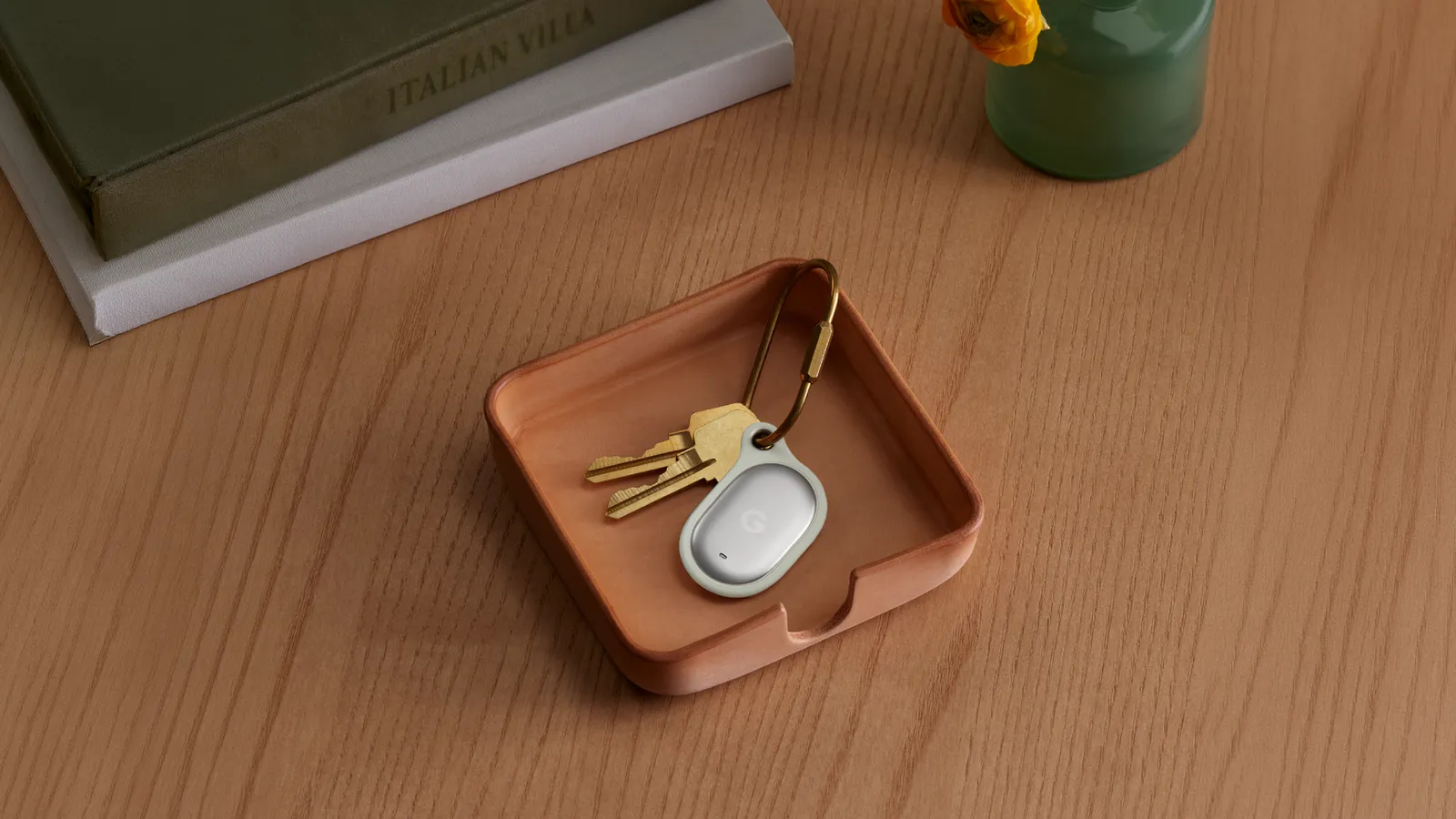
Tech Gear Hub has been waiting for this one since August, and the wait is almost over. The Google Pixel Tag, Google's first first-party Bluetooth item tracker, goes on sale tomorrow, November 11, 2026. It is a small pill-shaped tag that clips onto your keys, wallet, bag or luggage and reports its location through Google's Find Hub network, and it is priced to match Apple's AirTag almost dollar for dollar. If you carry an Android phone, this is the tracker Google has wanted you to buy for years, and tomorrow is the first day you actually can.
Quick Verdict
The Google Pixel Tag goes on sale November 11, 2026 for $29.99 ($29 in Google's announcement), or $99 for four. It uses the Find Hub network of over 1 billion Android devices, with UWB precision finding, a one-year battery and IP67 resistance. Android users should wait for it; iPhone users should buy an AirTag.
Table of Contents
- What Is the Google Pixel Tag?
- Google Pixel Tag Price and Release Date
- How the Google Pixel Tag Works
- Design, Battery and Durability
- Setup, Sharing and Left Behind Alerts
- Google Pixel Tag vs Apple AirTag vs Moto Tag 2
- Which Tracker Should You Buy?
- Who Should NOT Buy the Google Pixel Tag
- What We Still Don't Know
- Google Pixel Tag FAQ
What Is the Google Pixel Tag?
The Google Pixel Tag is Google's first tracker of its own. Until now, Android users who wanted a small tag for their keys had to buy one from a third-party brand such as Motorola, Chipolo or Pebblebee. Those tags worked, and they used Google's Find Hub network, but none of them was made by Google itself. The Pixel Tag changes that. It is Google's own hardware, built for its own finding network, in the same way the AirTag is Apple's own hardware for the Find My network.
Google announced the Pixel Tag on August 12, 2026, at its Made by Google event, on the same stage as the Pixel 11 phones and the Pixel Watch 5. Google did not bury the tag in a press release, which tells you how seriously it takes this product: the company has spent years building the Find Hub network, and the Pixel Tag is the hardware that network was waiting for.
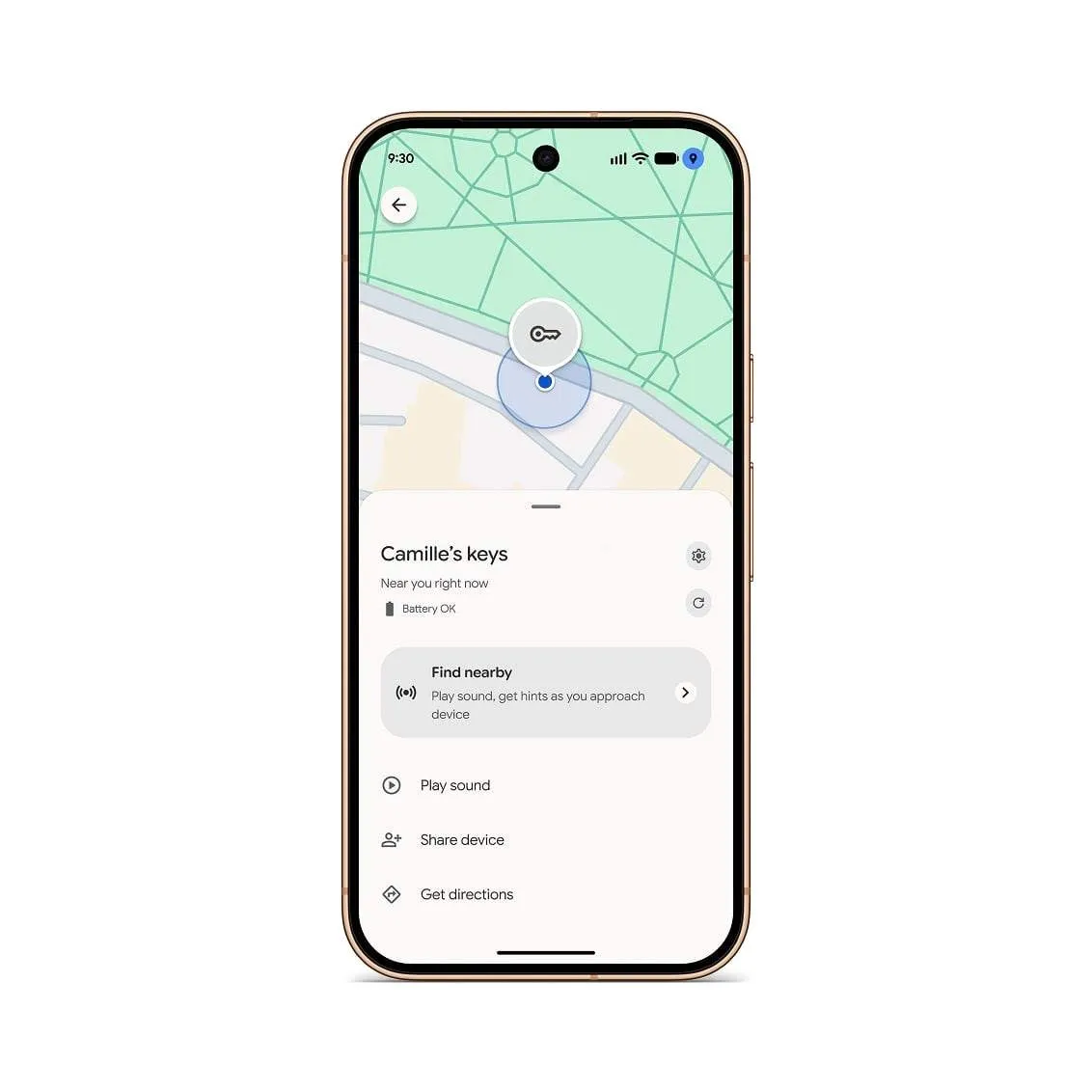
The idea is simple. You attach the tag to something you do not want to lose, such as your keys, your wallet, your backpack or your suitcase. When you lose that item, you open the Find Hub app on your Android phone and see the tag on a map. If the item is close by, you can make the tag ring. If it is further away, the Find Hub network takes over, and nearby Android phones quietly and anonymously report the tag's location back to you. The tag itself has no GPS chip and no cellular radio of its own. It does not need one, because the network does the heavy lifting.
That network is the Pixel Tag's biggest selling point. The Google Pixel Tag reports its location through a Find Hub network of more than 1 billion Android devices. That number matters more than any single feature on the tag, because a tracker is only as good as the crowd of phones around it. A tag backed by more than a billion phones is a real lost-item finder, and for the first time, Android users get one made by Google.
Google Pixel Tag Price and Release Date
The Google Pixel Tag goes on sale on November 11, 2026, which is tomorrow. Google confirmed that date in its own announcement back in August, and the date has not moved since. You will be able to buy it from the Google Store, and it is expected to appear at other retailers in the weeks that follow, although Google has not published a full retailer list for the United States yet.
The price needs a careful explanation, because Google's own pages do not quite agree with each other, and we would rather tell you that plainly than pick one number and hide the other. Google's blog announcement says the Pixel Tag costs $29 for a single tag and $99 for a four-pack. The US Google Store listing, checked on November 10, 2026, shows $29.99 for a single tag. The four-pack price on the Store had not been shown as a live checkout price at the time we checked, so the $99 four-pack figure still comes from Google's announcement.
Here is the honest way to read that. The Google Pixel Tag costs $29.99 for one tag on the US Google Store, or $99 for a four-pack — about $25 per tag. The 99-cent gap between the announcement and the Store is small, but the Store is the page that will charge your card, so $29.99 is the number to budget for. Four singles would cost about $120, so the four-pack saves you about $21.
That pricing is no accident. Apple's AirTag also costs $29 for one tag and $99 for a four-pack, so Google has matched Apple almost exactly. Google is not trying to undercut Apple on price. It is telling Android users they no longer have to pay a premium, or accept a compromise, to get a first-party tracker. The price is the same. The network is different. The phone in your pocket decides which one makes sense.
There is one more thing to know about the launch. The Pixel Tag arrives in a single color at launch, a light grey called Fog. There is no black version, no white version and no bright color option on day one. If you like the clean, pale look, that is good news. If you wanted a tag that stands out in a dark bag, you may need to wait for more colors or buy a case that adds some contrast.
How the Google Pixel Tag Works
The Pixel Tag works in three layers, and each layer covers a different kind of lost item. Understanding those layers is the fastest way to know whether this tag will actually help you, because the tag behaves very differently depending on how far away your keys are.
The first layer is the simplest one. When the tag is within Bluetooth range of your phone, you open the Find Hub app and tap to ring it. The tag's built-in speaker plays a sound, so you can follow the noise to your keys under a cushion. It also works in reverse: press the button on the tag and it rings your paired phone, even if your phone is on silent.
The second layer is precision finding. The tag carries both Ultra Wideband (UWB) and Bluetooth Channel Sounding, and on a compatible phone those radios turn a vague dot on a map into step-by-step guidance, showing how far away the tag is and, on UWB phones, which direction to walk in. There is a catch: precision finding needs a compatible phone. UWB needs a phone with a UWB radio, mostly Pro-level Pixels and a handful of other flagships, while Bluetooth Channel Sounding needs Android 16 and Bluetooth 6.0. Without either, you still get the map and the ring, but not the directional arrow.
The third layer is the crowd network, for when your item is truly lost. When the tag is out of Bluetooth range, nearby Android devices detect its Bluetooth signal and report its location to Google, which passes it on to you. Location data is end-to-end encrypted, so the strangers whose phones helped cannot see where your bag is. Your phone will also alert you if it detects an unknown tag travelling with you, and tell you how to ring it and what to do next.
The fourth feature sits across all three layers. Left Behind alerts can be switched on so your phone pings you when you walk away without a tagged item. Leave your keys on the café table and your phone tells you before you are a block away. Most lost items are not stolen; they are left behind, and a warning at the right moment is worth more than a map after the fact. Google has also said Left Behind alerts are coming to other trackers and headsets through Find Hub, but it has not published a device list, so we will not guess which models are included. The only device Google has confirmed for this feature is the Pixel Tag itself.
Design, Battery and Durability
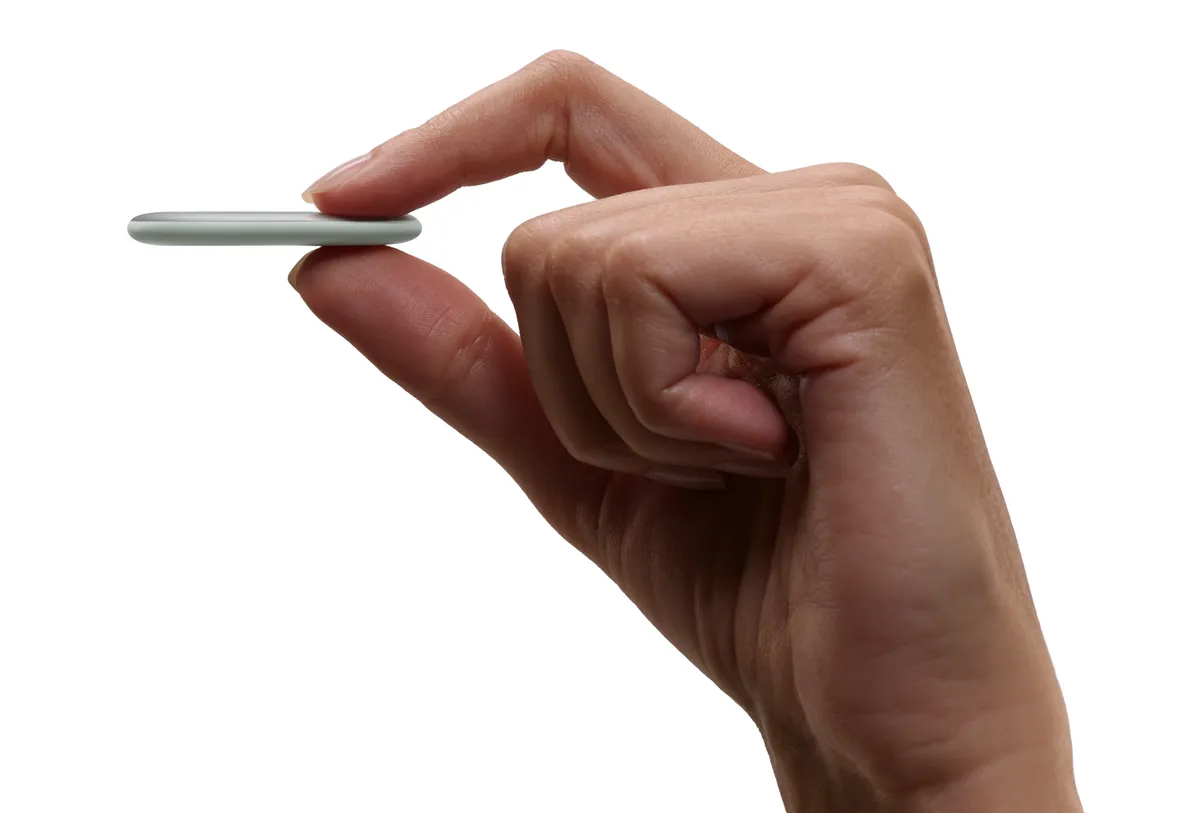
The Pixel Tag does not look like an AirTag, and that is deliberate. Apple's tag is a round coin; Google's is a thin, pill-shaped oval with a smooth stainless steel face, designed to slip into a wallet, a card slot or a luggage pocket, where a round coin would bulge. It is thin enough to forget about, which is exactly what you want from a tracker.
The numbers back that up. The Google Pixel Tag measures 1.1 by 1.8 by 0.2 inches and weighs 0.4 ounces, with a battery rated for up to about one year. At 0.2 inches thick, it is noticeably slimmer than a coin-shaped tracker, and at 0.4 ounces it is light enough that you will not feel it on a keyring. The slim shape is a real advantage for wallets, but it has a trade-off that buyers should know about. The tag's shape does not match the round AirTag, so the enormous range of AirTag cases, keychain holders and luggage mounts that has built up over the years will not fit it. You will need accessories made for the Pixel Tag itself, and that accessory range will take time to grow.
Durability is solid for a first-generation product. The Pixel Tag is rated IP67 for water and dust resistance, which means it can survive being submerged in up to 1 meter of water for 30 minutes. Rain, a spilled drink or a drop in a puddle should not kill it. It is not a swimming tracker, but for everyday accidents the rating is more than enough, and the stainless steel body is built to resist flexing and cracking.
The battery is one of the Pixel Tag's most practical features. It uses a user-replaceable CR2032 coin cell, the same cheap battery that powers most trackers, and Google rates it for up to about one year of use. When it runs low, you replace it yourself instead of throwing the tag away. One honest caveat: Google's rating comes from its own testing on pre-production units, so real-world life will depend on how often the tag rings and how cold the weather is. Treat "up to about one year" as a fair expectation, not a guarantee.
Setup, Sharing and Left Behind Alerts
Setting up the Pixel Tag is designed to take less than a minute. You pull the battery tab, bring the tag close to your Android phone running Android 9 or newer, and a Fast Pair pop-up appears on your phone. Tap Connect, follow the on-screen instructions, and the tag is paired. In the Find Hub app, you can name the tag by picking a category, such as keys or wallet, or by typing a custom label of your own. That is the whole setup. There is no separate app to install and no account to create beyond the Google account you already use.
Sharing is where the Pixel Tag is generous. You can share a tag with up to 10 people, so a family can track the same house keys, or two people sharing a suitcase can both see where it is. A tracker that only one person can see is a personal tool; one that ten people can see is a household tool.
Left Behind alerts deserve a second look, because they help before a loss happens rather than after it. Switch the feature on and your phone warns you when you leave a tagged item behind. Google notes that alert timing and effectiveness depend on network connectivity and device settings, so it will not be perfect in a dead zone or with an aggressive battery saver on. But even an imperfect warning is better than discovering your keys are missing when you are already at the airport.
The Pixel Tag also works beyond your phone. You can locate and ring it from your Pixel Watch, and Pixel Buds owners can ask Gemini to ring it for you. It still works fine with any Android phone running Android 9 or later, which covers the overwhelming majority of Android phones in use today.
That compatibility line is worth stating clearly, because it is also the tag's biggest limitation. The Pixel Tag works with Android 9 or later, and Google has not announced any iPhone support. There is no Find Hub app for iOS that pairs the tag, and no sign that one is coming. If your household is split between Android and iPhone, that matters. An Android user in the house can use the tag. An iPhone user cannot set it up or track it. Keep that in mind before you buy one as a gift for someone whose phone you have not checked.
Google Pixel Tag vs Apple AirTag vs Moto Tag 2
The comparison that matters most is not Pixel Tag against some abstract idea of a perfect tracker. It is Pixel Tag against the two tags people are actually choosing between today: Apple's AirTag, which owns the iPhone world, and Motorola's Moto Tag 2, which is already on sale in the United States and uses the same Find Hub network as the Pixel Tag. All three cost about $29 for a single tag. All three use a replaceable coin battery. All three are built to survive everyday life. The differences are in the network, the precision radios, and the phone in your pocket.
| Feature | Google Pixel Tag | Apple AirTag | Motorola Moto Tag 2 |
|---|---|---|---|
| Price (single tag) | $29.99 on the Google Store ($29 in Google's announcement) | $29 | $29.99 |
| Price (four-pack) | $99 (announced; Store price not yet live) | $99 | $99.99 |
| On sale | November 11, 2026 | On sale now | On sale now |
| Finding network | Google Find Hub (1 billion+ Android devices) | Apple Find My | Google Find Hub |
| Precision finding | UWB + Bluetooth Channel Sounding | UWB | UWB + Bluetooth Channel Sounding |
| Battery | Replaceable CR2032, up to about 1 year | Replaceable CR2032, about 1 year | Replaceable CR2032, up to 600 days (Motorola's claim) |
| Water resistance | IP67 (1 meter for 30 minutes) | IP67 | IP68 |
| Phone compatibility | Android 9 or later; no iPhone support announced | iPhone only | Android 9 or later; no iPhone support announced |
| Sharing | Share with up to 10 people | Share with up to 5 people (Apple's Family Sharing limit for an AirTag) | Share via Find Hub |
| Colors at launch | One: Fog | One: White (silver) | Multiple colors |
Read the table carefully and one thing jumps out: the Pixel Tag and the Moto Tag 2 are almost the same product on paper — same network, same two precision radios, same kind of battery, similar price. The differences are small but real. The Moto Tag 2 is already on sale, it is round and AirTag-shaped so it fits years of existing accessories, it claims a longer battery life of up to 600 days, and it carries a higher IP68 rating. The Pixel Tag is thinner, it is made by Google itself, it offers reverse phone ringing and Left Behind alerts directly in the Find Hub app without a second app, and it can be shared with up to 10 people. Neither tag beats the other outright.
The AirTag comparison is simpler, because it is decided by your phone. The AirTag uses Apple's Find My network and works only with an iPhone; the Pixel Tag uses Find Hub and works only with Android. There is no crossover. If you carry an iPhone, the Pixel Tag is not an option for you, no matter how good it is, and if you carry Android, the AirTag is not an option either.
Our Scores (Tech Gear Hub, Pre-Launch Judgement — Not Test Results)
No one outside Google has tested a retail Pixel Tag yet, because it does not go on sale until November 11. The scores below are our judgement from the confirmed specifications and the launch details, not measurements from a review unit. We will update them after real-world testing. Scores are out of 10.
- Value for money: Pixel Tag 8/10, AirTag 8/10, Moto Tag 2 8/10. All three cost about $29 for one tag and about $99 for four, and all three use a cheap replaceable battery, so none of them is a bad deal and none of them is a bargain either.
- Finding features: Pixel Tag 8/10, AirTag 8/10, Moto Tag 2 8/10. The Pixel Tag and Moto Tag 2 carry two precision radios, while the AirTag carries one, but the AirTag's Find My network is more mature, so the three tags land in the same place until real-world tests separate them.
- Everyday practicality: Pixel Tag 7/10, AirTag 9/10, Moto Tag 2 8/10. The AirTag wins here because of its enormous accessory range and its round shape. The Moto Tag 2 matches that shape and adds a longer battery claim and better water resistance. The Pixel Tag loses a point for its single Fog color, its unusual shape with few accessories at launch, and the fact that its precision finding needs a phone many buyers do not own.
Which Tracker Should You Buy?
If you carry an Android phone, the answer is straightforward: wait one day and buy the Pixel Tag, unless you need a tag today. It is Google's own tag for Google's own network, with the newest precision radios, reverse phone ringing, Left Behind alerts, and sharing with up to 10 people. For most Android users, it is the most natural choice, and the price matches the competition.
If you need an Android tracker today and cannot wait, buy the Moto Tag 2. It is already on sale in the United States, uses the same Find Hub network and precision radios, and has two practical advantages: a round shape that fits AirTag accessories, and a higher IP68 water rating. Its claimed battery life of up to 600 days is also longer than Google's one-year rating, although that is Motorola's claim rather than an independent test result.
If you carry an iPhone, buy the AirTag and do not think twice about the Pixel Tag. It does not work with iPhones, and no announcement suggests that will change. It costs the same, it is built for the Find My network every iPhone already uses, and it has the largest accessory range of any tracker ever made.
If you are choosing a phone as well as a tracker, the Pixel Tag is one more reason to look at Google's phones, and that is clearly part of Google's plan. The tag launched alongside the Pixel 11 phones, and its best features, such as UWB precision finding, work best on Pro-level Pixel phones. If you are already comparing Pixel phones, our Samsung Galaxy A36 vs Google Pixel 9a comparison and our OnePlus 13R vs Google Pixel 9a comparison will help you weigh the Pixel against its rivals, and if you are buying a Pixel 11 itself, check our Google Pixel 11 price drop deals before you pay full price. A tracker is a small purchase. A phone is a large one, and the phone you choose decides which tracker you can use for years.
One last buying note. If you need four tags, buy the four-pack. At $99 for four, the Pixel Tag costs about $25 per tag instead of $29.99, and most people who buy one tracker end up wanting a second one within a month: keys, wallet, bag, suitcase. Buying the pack now is cheaper than buying singles one at a time, and it means every important item is covered from the first day.
Who Should NOT Buy the Google Pixel Tag
Do not buy the Pixel Tag if any of these describe you:
- You carry an iPhone. The Pixel Tag works with Android 9 or later, and Google has not announced iPhone support. Buy an AirTag instead.
- You need a tracker today. The Pixel Tag does not go on sale until November 11, 2026. If you are travelling this week, buy a Moto Tag 2 that is already on sale.
- You want proven real-world performance. No independent battery, range or precision-finding tests exist yet, because no retail units are in anyone's hands. If you only buy tested products, wait for the first reviews.
- You switch between Android and iPhone. The Pixel Tag locks you to Android. A dual-network tag from another brand may suit you better, even if it costs more.
- You need a tag for a pet collar or outdoor gear in heavy rain. IP67 is good, but the Moto Tag 2's IP68 rating gives you more water protection for the same money.
What We Still Don't Know
Honesty matters more than hype on a launch story, so here is what is still unconfirmed the day before the Pixel Tag goes on sale. First, no one has tested a retail Pixel Tag. Every battery claim, every range claim and every precision-finding claim comes from Google's own announcement and its own testing. Treat any pre-launch "test" or "review" you see before November 11 with skepticism, because the product was not on sale and no reviewer had a retail unit. Real answers about battery life and finding accuracy will only come after November 11, when buyers and reviewers can use the tag in daily life.
Second, Google has not published a full list of retailers or international prices beyond the US Store listing. The tag is expected to reach other countries, and some international prices have been reported, but the US price and date are the only ones Google has confirmed in its own announcement. If you are buying outside the United States, check your local Google Store on November 11 rather than trusting a converted price from another country.
Third, the wider rollout of Left Behind alerts is still vague. Google has said the feature is coming to other trackers and headsets through Find Hub, but it has not published a device list, and we will not guess which models are included. If you own a third-party Find Hub tracker, the honest answer is that Google has not told us yet.
Finally, the accessory question is open. The Pixel Tag's pill shape means AirTag accessories will not fit, and cases and mounts made for it will be scarce on launch day. That range will grow, but early buyers should expect fewer choices. Check what is in the box, and what a holder costs, before you check out.
None of these unknowns makes the Pixel Tag a bad product. They make it a first-generation product on its first day of sale, and that is a fair way to judge it. Google has built a strong tracker on paper, at a fair price, on a network of more than a billion devices. Whether it is strong in daily life is a question only November 11 and the weeks after it can answer, and we will update this article when the first real-world tests arrive.
For the latest official details, read Google's own Pixel Tag announcement and check the Google Pixel Tag page on the Google Store for the live price and availability on launch day.
Google Pixel Tag FAQ
When does the Google Pixel Tag go on sale?
The Google Pixel Tag goes on sale on November 11, 2026, on the Google Store. Google announced the tag on August 12, 2026, at the Made by Google event, alongside the Pixel 11 phones and the Pixel Watch 5.
How much does the Google Pixel Tag cost?
Google announced the Pixel Tag at $29 for a single tag and $99 for a four-pack, but the US Google Store listing shows $29.99 for a single tag, checked on November 10, 2026. Budget for $29.99 for one tag, or $99 for four, which works out to about $25 per tag.
Does the Google Pixel Tag work with iPhone?
No. The Google Pixel Tag works with Android phones running Android 9 or later, and Google has not announced iPhone support. iPhone users should buy an Apple AirTag instead, because the Pixel Tag cannot pair with an iPhone.
How long does the Google Pixel Tag battery last?
Google rates the Pixel Tag's replaceable CR2032 coin battery for up to about one year. You can replace the battery yourself when it runs low. The rating comes from Google's own testing, so real-world life may vary with use.
What is the difference between the Google Pixel Tag and the Apple AirTag?
The main difference is the network and the phone. The Pixel Tag uses Google's Find Hub network and works only with Android, while the AirTag uses Apple's Find My network and works only with iPhone. Both cost about $29, both have UWB precision finding, and both are rated IP67, so your phone decides which one you should buy.
Should I buy the Google Pixel Tag or the Moto Tag 2?
Buy the Pixel Tag if you want Google's own tag, reverse phone ringing, Left Behind alerts in the Find Hub app and sharing with up to 10 people. Buy the Moto Tag 2 if you need a tag today, because it is already on sale, or if you want a round AirTag-shaped tag with a higher IP68 rating and a claimed battery life of up to 600 days.


0 Comments