By Tech Gear Hub • Last updated: November 3, 2026
As an Amazon Associate I earn from qualifying purchases. Prices change often, so please check the current price on Amazon before you buy.
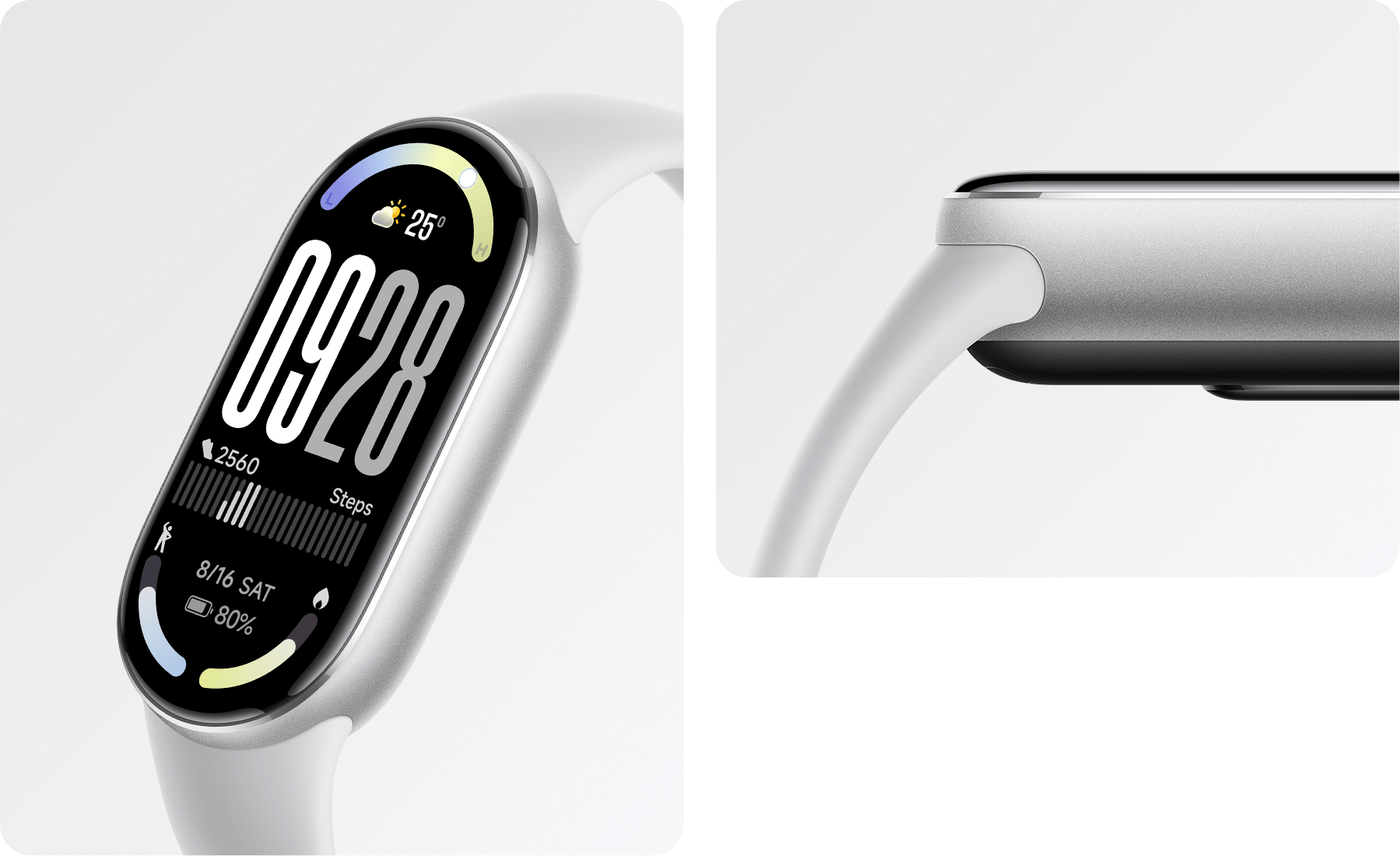
The Xiaomi Smart Band 10 in Glacier Silver, with its bright 1.72-inch AMOLED display. Photo: Xiaomi official product page.
Quick Verdict
For most people, the Xiaomi Smart Band 10 is the better buy because it gives you a bigger, brighter screen, up to 21 days of battery life, and a lower price with no subscription. The Fitbit Inspire 3 is the better pick if you are an iPhone user who wants Fitbit's coaching app and does not mind its smaller screen and Premium paywall.
Contents
Tech Gear Hub compared the Fitbit Inspire 3 with the Xiaomi Smart Band 10 to find the best budget fitness tracker in the fitness trackers category for 2026. Both bands track steps, heart rate, sleep, and workouts, and both cost far less than a smartwatch. But they take very different paths to that low price: Fitbit leans on its app and coaching, while Xiaomi leans on hardware — a bigger screen, a longer-lasting battery, and no subscription at all.
The headline numbers tell much of the story. The Xiaomi Smart Band 10 lasts up to 21 days on a charge, while the Fitbit Inspire 3 lasts up to 10 days. The Band 10's 1.72-inch AMOLED display peaks at 1500 nits, and it charges in about 1 hour. The Inspire 3 lists at around $99.95 and is often on sale near $70, while the Band 10 sells in the US marketplace for roughly $50 to $55 — check the current price before you buy, because both move around during sales.
At a Glance: Specs and Scores
| Feature | Fitbit Inspire 3 | Xiaomi Smart Band 10 |
|---|
| Display | Color AMOLED touchscreen | 1.72-inch AMOLED, 212 x 520, 1500 nits peak |
| Battery life | Up to 10 days | Up to 21 days |
| Charging | Magnetic charger (check current listing for charge time) | About 1 hour |
| Exercise modes | 20+ exercise modes | 150+ sports modes |
| GPS | Connected GPS (uses your phone) | Connected GPS (uses your phone) |
| Water resistance | Water resistant to 50 meters | 5ATM water resistance |
| Subscription | Fitbit Premium paywall for advanced metrics; 6-month trial for new users | None required |
| Compatibility | iOS 15+ / Android 9+ | Mi Fitness app (iOS and Android) |
| Typical US price | Around $99.95 list, often near $70 on sale | Roughly $50 to $55 |
Our own 10-point scores, based on the specs above and how each band fits daily life:
| Criterion | Fitbit Inspire 3 | Xiaomi Smart Band 10 |
|---|
| Battery | 7/10 | 9.5/10 |
| App and insights | 9/10 | 7.5/10 |
| Value | 7/10 | 9.5/10 |
The scores are consistent with the pros and cons below: the Band 10 wins on battery and value by a wide margin, while the Inspire 3 wins on the app experience.
Fitbit Inspire 3: The Coaching Pick

The Fitbit Inspire 3. Photo: Google Store.
The Fitbit Inspire 3 is a slim, light band built around the Fitbit app. Its color AMOLED touchscreen shows your stats at a glance, and it tracks 24/7 heart rate, sleep with a nightly sleep score, and stress management tools. With 20+ exercise modes and water resistance to 50 meters, it covers the workouts most people actually do, from walking and running to swimming.
Where the Inspire 3 pulls ahead is coaching. The Fitbit app turns your data into guidance, and its sleep and readiness tools are genuinely useful — but there is a catch. Advanced metrics such as the Daily Readiness Score and Sleep Profile sit behind paid Fitbit Premium, although new users get a 6-month trial included. If you never pay, you still get the core tracking, but some of the most interesting insights disappear after the trial ends.
One more honest limit: the Inspire 3 has no built-in GPS. Like the Band 10, it uses connected GPS, borrowing your phone's GPS for mapped runs. That is fine if you always carry your phone, but it is not a true running watch. It works with iOS 15 and later and Android 9 and later, per the manufacturer's official specs.
Pros:
- Excellent Fitbit app with sleep scores, stress tools, and coaching
- Slim, comfortable design that disappears on the wrist
- Water resistant to 50 meters, so swimming is covered
- Up to 10-day battery is still strong for a tracker
- Works well with iPhones, where Fitbit's ecosystem is strongest
Cons:
- Smaller screen than the Band 10, so less glanceable info
- Daily Readiness Score and Sleep Profile need paid Fitbit Premium after the trial
- No built-in GPS — connected GPS only
- Higher typical price, around $99.95 list
Check the current price of the Fitbit Inspire 3 (Midnight Zen/Black) on Amazon
Xiaomi Smart Band 10: The Value Pick

The Xiaomi Smart Band 10 (shown with an optional metal bracelet). Photo: Xiaomi official product page.
The Xiaomi Smart Band 10 is the hardware bargain of this comparison. Its 1.72-inch AMOLED display runs at 212 x 520 resolution and peaks at 1500 nits, which makes it easy to read outdoors — a real advantage over the Inspire 3's smaller screen. The aluminum alloy frame also feels more premium than the price suggests, and Xiaomi sells a wide range of straps if you want to dress it up.
Battery life is the Band 10's superpower. Xiaomi rates it at up to 21 days, more than double the Inspire 3's up to 10 days, and it recharges in about 1 hour. In practice, heavy use with always-on display and frequent workouts will cut that number, but even half of it means charging roughly once a week instead of every few days.
With 150+ sports modes, Bluetooth 5.4, and 5ATM water resistance, the Band 10 covers swimming and nearly every workout you can name. There is no subscription required, so every metric in the Mi Fitness app is yours from day one. The trade-off is the app itself: Mi Fitness is solid and improving, but its coaching and sleep insights are not as polished as Fitbit's, which is why it scores 7.5/10 against the Inspire 3's 9/10 on app and insights.
Pros:
- Big, bright 1.72-inch AMOLED display at 1500 nits peak
- Up to 21-day battery life, with about 1-hour charging
- 150+ sports modes and 5ATM water resistance
- No subscription — all features included
- Lower price, roughly $50 to $55 in the US marketplace
Cons:
- Mi Fitness app coaching is less polished than Fitbit's
- No built-in GPS — connected GPS only
- US availability runs through marketplace sellers, so check the seller before buying
- Smaller community and fewer third-party app integrations than Fitbit
Check the current price of the Xiaomi Smart Band 10 (Global, Glacier Silver) on Amazon
Display and Design
Side by side, the screen gap is the first thing you notice. The Band 10's 1.72-inch display shows more lines of information — time, steps, heart rate, and weather — without scrolling. The Inspire 3's smaller color AMOLED touchscreen is crisp but shows less at a glance, so you swipe more. Both are touchscreens, both are slim, and both are comfortable enough to sleep in, which matters because sleep tracking is one of the main reasons to buy either band.
Design taste is personal, but the Band 10's aluminum alloy frame and wide strap range give it a slight edge for people who want one band for the gym and the office. The Inspire 3 is the more discreet of the two, which suits smaller wrists and anyone who wants a tracker that looks like nothing at all.
Battery Life, Health Tracking, and the App
Battery life is not close. The Band 10's up-to-21-day rating against the Inspire 3's up-to-10-day rating means roughly half as many charges over a year. If you hate charging wearables, that alone may decide this comparison. Both bands track heart rate around the clock, sleep, and stress, and both are swim-friendly — 50 meters for the Inspire 3, 5ATM for the Band 10.
The app question cuts the other way. Fitbit's app remains the gold standard for turning raw data into advice: sleep scores, readiness, and trends are presented clearly, and iPhone users in particular tend to stick with it. The catch is the Premium paywall on the advanced metrics after the 6-month trial. Xiaomi's Mi Fitness app gives you everything with no subscription, but its insights are simpler. If you mainly want numbers — steps, heart rate, sleep duration, workout stats — the Band 10's app is plenty. If you want coaching, the Inspire 3 earns its higher price.
For more context on how these trackers compare with other wearables, see our Amazfit Bip 6 versus Apple Watch SE comparison. And if workouts are your main use, our guide to gym earbuds under $30 pairs well with either band.
Who Should Buy — and Who Should Not
Buy the Xiaomi Smart Band 10 if: you want the best value, the biggest screen, and the longest battery life; you dislike subscriptions; or you want 150+ sports modes for under about $55.
Buy the Fitbit Inspire 3 if: you are an iPhone user who wants Fitbit's coaching app, sleep scores, and readiness tools, and you do not mind paying for Premium after the trial to keep the advanced metrics.
Who should NOT buy either: runners who need built-in GPS should skip both — neither band has it, since both rely on connected GPS from your phone. And if you want apps, calls, and a full smartwatch experience on your wrist, neither of these slim bands will satisfy you; save for a proper smartwatch instead.
Final verdict: For most people, the Band 10 is the better buy because it wins on screen, battery, and price with no subscription attached. The Inspire 3 is still the right choice for Fitbit loyalists and iPhone users who value coaching over hardware. Either way, check the current price before buying — the Inspire 3 often drops near $70 on sale, which narrows the gap considerably.
Frequently Asked Questions
Which is better, Fitbit Inspire 3 or Xiaomi Smart Band 10?
For most people, the Xiaomi Smart Band 10 is better because it has a bigger, brighter screen, up to 21 days of battery, and a lower price with no subscription. The Inspire 3 wins on app coaching.
Does the Fitbit Inspire 3 need a subscription?
No, core tracking works without one. But advanced metrics like Daily Readiness Score and Sleep Profile need paid Fitbit Premium after the included 6-month trial for new users.
Does the Xiaomi Smart Band 10 have GPS?
No, it has no built-in GPS. Like the Inspire 3, it uses connected GPS, which borrows your phone's GPS for mapped workouts.
Can you swim with the Fitbit Inspire 3 and Xiaomi Smart Band 10?
Yes, both are swim-friendly. The Inspire 3 is water resistant to 50 meters, and the Band 10 carries 5ATM water resistance, per the manufacturers' official specs.
How long does the Xiaomi Smart Band 10 battery last?
Xiaomi rates the Band 10 at up to 21 days of battery life, with about 1 hour to recharge. Heavy use with always-on display will reduce that, but it still lasts far longer than the Inspire 3's up to 10 days.
Is the Xiaomi Smart Band 10 worth it at around $50?
Yes, at roughly $50 to $55 it is one of the best values in fitness trackers, with a 1.72-inch AMOLED display, 150+ sports modes, and no subscription. Check the current price and seller before buying.
Sources: Xiaomi's official Smart Band 10 product page (mi.com) and the Fitbit Inspire 3 listing on the Google Store (store.google.com).


Comments
Post a Comment